q

You are browsing the archive for Sales Management.

2011 the year of Sales leadership and Integrity

January 27, 2011 in Sales Leadership, Sales Management, Success

In December 2010 we published The 12 Sales Trends of 2011 and invited readers to vote on what they thought would be the most important trends in sales for this year.  Thank you to everyone who shared their views and voted.  Every month we will explore one of the trends in more detail, starting with the trends voted as most important to you.

Without doubt Sales Leadership and Integrity topped the rankings; the voting was overwhelming in favour of these two trends.    The voting revealed the sales trends for 2011 in order of importance:

  1. The Year of the Sales Leader
  2. Integrity – your sales edge
  3. Knowing your business
  4. Prospecting and Social Media
  5. Results not Solutions
  6. CRM as a Business Strategy
  7. The Sales Pioneer
  8. Rethinking Incentives (The Science of Motivation)
  9. Procurement and Value Managed
  10. Leading and Examined Life
  11. The New Sharing
  12. Getting Personal

It’s the year of the sales leader.   The increasing complexity of business structure, market changes, people dynamics, customer buying patterns and evolving technology, amongst other things have made the made the job of sales managers and leaders that much more challenging.

Keeping on top of their jobs will be a test of character as much as anything.  The message is clear if businesses don’t get their sales leadership and management capabilities functioning effectively, their sales efforts will be in peril in 2011 and beyond.  The research is clear, educate and develop your sales managers to be effective sale leaders and the impact on sales results will be dramatic.

International research into sales training reported that if Sales Managers were more frequently and better trained and coached then their sales teams achieved higher performance and results.  In no other type of sales training was a more positive correlation found between frequency of training and sales performance.  The study in Sales Force Effectiveness also reported that Sales Management training is the category of sales training that is addressed with the least frequency, in fact it is less than annually or not at all.   Most sales managers are given very little or no support when it comes to being a competent, effective Sales Manager.  In fact, many Sales Managers reported that they were given no formal training in Sales Management practices, either before or during their tenure as a Sales Manager.

Smart businesses will invest in the ongoing development of their sales leaders, producing highly effective professional business people who are knowledgeable and skillful in strategic action, technology, and global perspectives, and who excel at coaching, and proactive review.

Given the rapid pace of change, we need highly functioning Sales Managers and Leaders who can lead from the front with courage, insight, skilful action and a clear vision.

In 2011 and beyond what do sales leaders need?

  • Knowledge about: markets, customers, products, competitors, technology, new marketing, what  good sales talent looks like, how to develop strategy, fiscal management,  etc.
  • Skills in: coaching, leadership, management, recruitment, conflict resolution, negotiation, strategic thinking, planning, creating and leveraging networks, stakeholder management, selling, problem solving, etc.
  • Personal Insight: self awareness, ethics, integrity, professionalism, resilience, optimism and future mindedness, achievement focus, initiative, innovation and improvement,  collaborating to achieve results, team orientation, decisive, etc.
  • Sales Resources: sales templates, coaching guides, recruitment resources, sales planning tools, CRM systems, performance management systems, etc.

Achieving mastery in all these areas can take a life time, however those companies that support and train all their sales leaders and managers in these core areas will gain a significant competitive advantage in 2011.

If you need further information on sales management and leadership training please contact us on (03) 9532 7677 or email us.

Remember everybody lives by selling something.

Author: Sue Barrett, www.barrett.com.au

Why hiring or keeping the 600lb sales gorilla is a mistake

December 2, 2010 in Attitudes & Behaviours, Communication, Culture, Ethics & Values, Performance Management, Recruitment, Sales Leadership, Sales Management, Teamwork

For many years the legend of the 600lb sales gorilla or Alpha sales superstar has been strutting the hallways and boardrooms of businesses.  Often revered for achieving top of the league ladder sales results, yet feared by many for their aggressive, manipulative, ego centric, demanding, intimidating antics, countless CEO’s and sales managers have allowed these sales prima donnas to remain in their sales teams but at what cost to their sales team and their business?

Too scared to confront them about their behaviours or sales tactics for fear of losing their sales contribution, many sales managers and their sales team have simply suffered in the presence of these sales bullies.  In my many years of working with sales teams and sales managers I have met my fair share of sales gorillas and their distressed managers and sales teams.  Here’s what I have observed:

  1. They have the ear of the Managing Director/CEO who thinks they can do no wrong.
  2. They won’t let the business anywhere near their customers.
  3. They tell tall tales about their legendary sales conquests.
  4. They refuse to be coached, counseled or trained.
  5. They are very demanding, always complaining about the lack of resources and taking up the time of countless people to do their bidding, leaving the other sales people to fend for themselves.
  6. They often exhibit bad behavior, and may be heard swearing or making inappropriate comments to their colleagues or other staff who are often too fearful to report them (see point 1).
  7. They can engage in questionable sales tactics, yet claim that they are pristine and operate with the utmost of integrity.
  8. They claim to know a lot of people and be very well connected.
  9. They use actual or implied intimidation to get their way with internal team members.
  10. They use charm and manipulation to get their way with key stakeholders.
  11. They act with righteous indignation if you question anything about them.
  12. They don’t think they need to comply with company policies so often refuse to complete paperwork or keep up to date CRM’s if they think it’s a ‘waste of time’.

You only have to watch the movie ‘Glengarry Glen Ross’ to see your fair share of sales gorillas.  This type of sales culture was revered by a number of industry sectors in the 70’s and 80’s, including real estate, car sales, stock broking, etc.  Watching it makes me feel ill, but many sales teams got off on this and even use ‘Glengarry Glen Ross’ as a model of how they should sell in some quarters today.

Yet most people watching ‘Glengarry Glen Ross’ or meeting their very own sales gorilla feel repulsed by them.  Often very wary of them, others wonder why they have to tolerate them and why management won’t act.  Truth is these sales gorillas have never been pulled into line.  Their outstanding sales results have somehow bought them immunity from behaving in a civil manner.   The smell of money they can bring in has condoned behaviour that has often outweighed the need to act ethically and uphold team values and respectful behavior.  Their bad behavior has been allowed to manifest without restrictions, ‘oh let him get away with it.  Look at the results he pulls in’.  These sales gorillas are the direct result of poor quality leadership, lack of clear standards and bad decision making.

What most businesses do not know is that these sales gorillas, for all their so called sales success, actually fall well behind the real sales superstars in terms of achieving high level and sustainable sales results who, by contrast, are open minded, curious, collaborative, team oriented, open to learning and aim for partnerships on every level.  And these real sales superstars are humble too which is a direct contradiction to the behavior of the sales gorillas.

  • So are you currently letting fear hold you and your team hostage by allowing your sales gorilla to persist?
  • What would happen if you got rid of the sales gorilla?
  • How would the rest of your team respond when they left?
  • What would happen to sales and the clients?

In my experience when the sales gorilla finally departs, there is an initial sense of shock which quickly gives way to relief and the opportunity for the sales team to really pull together and prosper.  The biggest fear of losing the sales gorilla’s sales power and their clients doesn’t eventuate in the vast majority of cases.  In fact it is often revealed that the clients are happy the sales gorilla has left and look forward to a more open and prosperous relationship with the company concerned and sales grow even more.

I am not suggesting that most leaders intentionally hired these sales gorillas or intended for them to manifest however, without clear codes of conduct or values and a proper understanding of what you want by way of ‘good sales performance’ you cannot hire or develop the right sales people to do the right things in the right sales culture.

In his book ‘The No Asshole Rule’, Leigh Buchanan writes about bosses behaving badly.  Its thesis – don’t hire jerks, has become public policy in many companies around the world.  I would suggest we think clearly about what we want manifested in our sales teams and take a leaf out of Leigh’s book and make sure we employ ‘The No Asshole Rule’ and don’t hire sales jerks.

Remember everybody lives by selling something.

Author: Sue Barrett, www.barrett.com.au

How much training should I give my sales team?

November 18, 2010 in Coaching, Sales Leadership, Sales Management, Sales Planning, Sales Training

Highly effective sales people and teams do not happen by chance.  A study by Aberdeen Group (2009) of 8,500 top performing companies with a turnover in excess of $50 million, showed that the highest performing of these in each of their industries provided their sales teams with no less than 8 days of focussed sales training per year, and this did not include product training.

Another Aberdeen Group Productivity report (2008) showed that top-performing sales organisations were 24% more likely than all other companies to either have in place, or have short-term plans to implement, formal sales training methodologies.

It is plausible that larger businesses can afford to, and do invest in, the development of their sales teams on a more consistent basis.  Usually supported by Learning & Development departments, access to the latest research and training providers, corporates and larger businesses can appear to have the upper hand when it comes to highly skilled sales and service teams.

Providing regular and quality training and coaching can prove to be a challenge for smaller businesses.  Finding the time to take your sales team out of the field to train them, getting access to quality, customised training content and quality trainers at an affordable price is problematic.  Too many ‘off the shelf’ sales programs aren’t usually flexible enough to meet most sales teams’ requirements and are often limited to simple transactional sales interactions or motivational ‘rah rah’ sessions.  However, for many SME sales teams to compete head to head with the skills of larger businesses they need to be trained in more complex selling skills and processes which include:

  • Sales and account planning
  • Prospecting skills and strategies
  • Consultative/diagnostics selling skills
  • Negotiation skills
  • Interpersonal communication skills
  • Public speaking, pitching and presentation skills
  • Account management and development
  • Business acumen
  • Deal making and proposal/tender writing
  • Self or time management
  • Self awareness, resilience and insight

So how can SME’s continue to develop the skills, knowledge and mindset of their sales teams even though they do not have the resources of a major corporate?  We need to be clever about creating a continuous learning environment in SME’s. Here are a few tips:

  1. Think about what standard you need your sales and customer service people to be operating at.  This will help you determine the type of training you need to provide them with.
  2. Assess what you feel confident delivering in-house and what you need to access from qualified, external providers.  Research your external providers and make sure they deliver practical, competency based training that can be taught and transferred to others.
  3. Map out a 12 month learning plan which provides regular learning sessions and has clear learning outcomes so you can check progress and skills and knowledge development.  Not all of your training need be full day workshops.  The best value is gained from ‘mini’ sessions of 30 minutes to 1 hour run regularly (fortnightly or at least every 4 weeks) interspersed with more formal classroom learning i.e. between 1-4 days per year on key topics where you need formal instruction.
  4. The mini learning sessions can focus on specific topics.  A great way to include everyone and create accountability for learning, is to allocate topics to your sales and customer service people and have each of them select a topic they will research and present to the team.  This helps you spread the learning load whilst giving your people the chance to practice their presentation skills.  Rotate these sessions amongst your sales team. Make sure the environment is supportive and constructive to encourage rather than discourage participation.
  5. Reading material is in abundance.  Giving your people access to free sales articles, such as the ones I write, can be used to assist further learning.  Many of our clients’ sales managers use these sales articles to aid their sales team development.  Whether they send it out as a topic to read or use the topic as a point for discussion in their sales meeting, they are creating a continuous learning environment.
  6. If you are going to invest in external development, a critical area is sales management and coaching.  This can have the greatest return on investment for you and your sales team in terms of their professional development.  Between 60-70% of a sales managers time should be devoted to people development.  We suggest you get yourself or your sales managers professionally trained as sales coaches and trainers.  For instance, we have built a Sales Leader’s Tool Kit which includes sales coaching field guides and mini skill, drill learning sessions that sales managers can run with their sales teams on a regular basis.  This equips them to run structured, well planned sessions, and aids the development of your sales teams and shows your commitment to their ongoing development.

SME’s don’t need to be left behind when it comes to having high performing sales and customer service teams.

Continuous learning is a conscious choice and does not happen by accident.  Whether you have access to large sums of money or not you can create a viable learning environment and continue to enhance the capabilities of your sales and service teams.

Start with the end in mind –sales mastery is a way of life not a fad.

Remember everybody lives by selling something.

Author: Sue Barrett, www.barrett.com.au

When should we appoint a Sales Manager?

October 7, 2010 in Recruitment, Sales Leadership, Sales Management, Strategy

For many start ups and small businesses having a full time sales manager in place is not a viable option.  Firstly, there is usually no one to lead and manage in the sales function however, the function of sales management should be on your ‘To Do List’ as a business owner/manager even if you are sales managing yourself.  Paying attention to your sales activities and results, developing your sales strategy and plan, knowing who to target and how to target viable prospects, mapping your metrics (lead/prospect/sales conversion ratios, etc.), success rate, development of product knowledge, reporting, proactive review, and keeping yourself motivated and committed all form part of a sales manager’s role.

Making sure these activities feature as part of your regular business practices, your way of doing business, from ‘Day One’ means that when it comes time to appoint a sales manager you have the basis of a sales management function in place.

So when is the right time to appoint a sales manager?  How many sales people do you need to get to before you can afford a sales manager?  Do you need your sales manager to sell as well?

These are some of the critical questions facing many SME’s.  In reality the sales management function should be the second most powerful role in a business behind the CEO.  The role has considerable power to make or break a business.  Effective sales managers lead the charge for sales growth directly and via a sales team.  They make important decisions about customer acquisition, growth and retention, entry into new markets and viability of a sales force.

The appointment of a sales manager into your business is one of the most important decisions you will make.  Getting it wrong can be catastrophic.  So here are some guidelines to help you with your sales management employment plan:

Step 1:  Begin with the end in mind

What do you want to see happen to your business in the next 5+ years?  How do you visualise it happening?  By beginning with the end in mind you can then work backwards and plan your business progression by mapping it out over the next 3-5 years, taking into account your revenue and profit projections, then plan your sales force around these guidelines/goals including the appointment of a sales manager.  For instance, I have clearly articulated my business vision over the next 10 years including the next several steps in my business growth plan which includes mapping the size and type of sales team and the type of sales manager I need.  With a clear plan in place, I have now gone to market and appointed the first role, a Director of Sales, whose job it is to grow my business and build a sales team around him to achieve our revenue and profit projections via a well established and clearly articulated sales strategy.  In the early stages, the Director of Sales needs to be able to sell as well to get the sales momentum going.  This way they learn my business, how it works and how to make it better.  They know what needs to be in place for an emerging sales team and how to promote and position my business favourably in the market.

Step 2: Create a transition plan

As your business grows you need to plan for growth in your sales team.  You can start with a Director of Sales to lead the charge like I have or you can appoint sales people.  However, sooner or later you will need someone performing the role of sales manager in a formal manner.  You can use the following points as a guide:

  • If you have 2 or more sales people you will need someone taking the lead on the sales management function on a part time basis.
  • If you have 4 of more sales people you are likely to need a full time sales manager who can also sell into and manage key accounts.
  • If you have 8 or more sales people you will need a full time sales manager whose sole function is to be a sales manager.
  • If you have more than 10 sales people you need more than one sales manager.

A word of advice: don’t leave it too late.  Usually people appoint a sales manager out of desperation after they are exhausted trying to do everything themselves.  Don’t let that be you.

Remember everybody lives by selling something.

Author: Sue Barrett, www.barrett.com.au

Why we should put the Trainer back into Sales Management

September 8, 2010 in Coaching, Performance Management, Sales Management, Sales Training

Up until 20 years ago, a key function of a sales manager’s role was the regular training of their sales people.  What did this look like?  Well, something like this: weekly 1 hour power training sessions for the sales team focusing on honing key skills, bi-monthly half day or 1 day sessions drilling down on account planning, strategy, market and product knowledge, and formal class room training usually employing external, expert training providers on a once or twice yearly basis to boost their teams to the next level.  This was all supplemented by sales meetings and one-on-one coaching.

Many sales managers of yesteryear were good trainers.  However, through my observations across many businesses, the training component has been replaced by compliance.  Caught in a bind of having to meet their reporting and meeting obligations, sales managers lose valuable time that should be invested in the continuous development of their sales people.

I am seeing that many sales managers are now relegated to being ‘CRM compliance police’, caught up in reporting on numbers of leads, meetings, conversions, etc., usually at the behest of senior management to justify their investment in a CRM.  This means that sales people are often left to fend for themselves with no sales management support at all and often feel under constant scrutiny to meet their numbers quotas.

I get constant complaints from sales managers about this ‘numbers’ obsession and they not being able to support and develop their people to be their best.  They know numbers are important but numbers are not the only aspect of effective sales performance – yet why are they required to worship at the compliance alter?

Training sales people is vital to healthy and sustainable sales performance.  With markets becoming more complex and changing at rapid rates, regular training is imperative to help sales people keep up to date and effective.  Training needs to be regular for it to have any effect.  Regular ‘mini’ training sessions in short, sharp bursts combined with one-on-one coaching in the field makes for better and better sales performance as well as team spirit, unity and retention.  But when do sales managers have the time to learn how to be good trainers and coaches?  And when do they have the time to put this into practice?

Since 1997, we have been accrediting and training sales managers at Barrett to be competent trainers and coaches.  Many report very positive outcomes as a result of being able to conduct regular training with their teams.  Besides sales lifting, team moral improves, there is better retention of staff, and clients seem happier too.

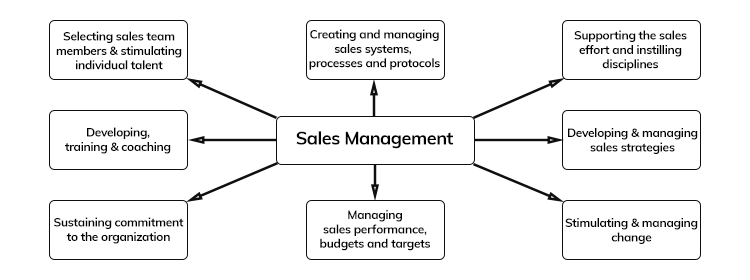
It has been shown that if a business has skilful, professionally trained sales managers who can strategise and plan; lead, coach and train; effectively manage their unit; liaise, link and collaborate with other divisions; and regularly report relevant, real data to the business, then the performance of the sales team will improve significantly.  No other area of development shows such a positive correlation with sales results.

As a rule of thumb, ‘best practice’ states a sales manager should invest their time accordingly:

This is a plea on behalf of beleaguered sales mangers everywhere – if you want great sales results, get your sales managers training again.

Remember everybody lives by selling something.

Author: Sue Barrett, www.barrett.com.au