build-a-recurring-rhythm-rather-than-a-one-off-event

Why change sticks in some organisations and stalls in others

In 30 seconds

Problem: Most training never survives contact with the daily job. Organisations invest in workshops, then wonder why behaviour reverts within weeks, assuming the fault lies with the training content or the learner’s motivation.

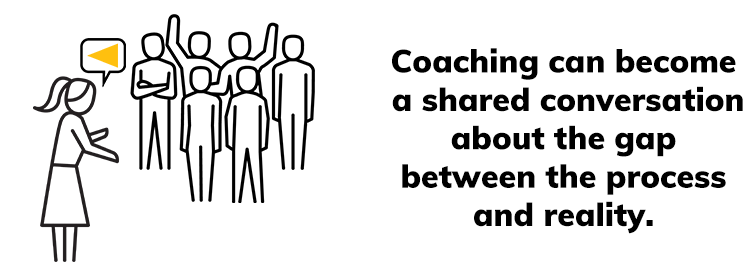
The Shift: Research points elsewhere. The single biggest predictor of whether learning sticks isn’t the course, it’s whether the immediate manager reinforces it afterwards. Call centres already run on a rhythm built for this, continuous coaching, clear standards, short distance between leader and work, which is why change takes there without a push.

The Solution: Involve managers before learners, build a recurring rhythm rather than a one-off event, and measure behaviour change instead of course completion.

Why change sticks in some organisations and stalls in others Read Post »

discipline-creates-freedom-proper-structure-liberates-teams-enabling-high-performance

The “Just” Trap: How Lazy Leadership Kills Sales Performance

In 30 seconds

The Problem: Leaders use “just” language – “just use the CRM,” “just focus on value” – which is lazy thinking disguised as decisiveness. This dumps complexity onto teams without frameworks, creating chaos and leaving people feeling inadequate when they can’t “figure it out.”

The Shift: “Just” signals abdication, not empowerment. Real leadership means doing the hard work of structuring complexity so teams can execute with confidence, not finding shortcuts that avoid the heavy lifting.

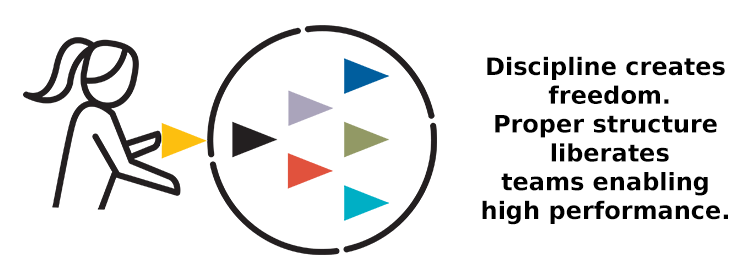
The Solution: Four leadership imperatives: Build tool integration into workflows; create specific sales frameworks replacing platitudes; establish continuous feedback loops beyond one-off training; coach through complexity using telemetry data. Discipline creates freedom: proper structure liberates teams from guessing and overwhelm, enabling high performance.

The “Just” Trap: How Lazy Leadership Kills Sales Performance Read Post »

sales-telemetry-why-excellence-lives-in-273-micro-steps

Sales Telemetry: Why Excellence Lives in 273 Micro-Steps

In 30 seconds

The Problem: Traditional “hero” sales models are fragile and unscalable. Personality-driven approaches leave organisations vulnerable when stars leave, and oversimplifying complex B2B sales creates more chaos, not less.

The Shift: Ashby’s Law of Requisite Variety proves you cannot manage high complexity with low-resolution processes. Modern B2B sales: with 10+ stakeholders, year-long cycles, and hybrid engagement, demands sophisticated internal systems matching external complexity.

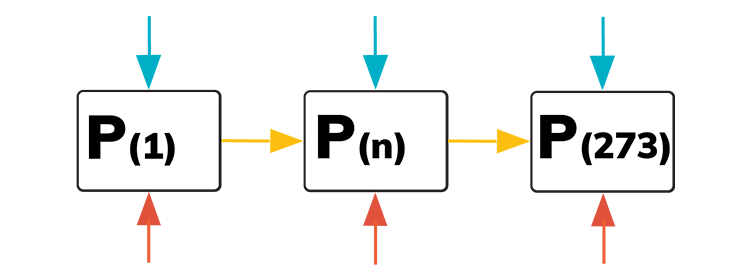
The Solution: High-resolution sales process mapping (273 micro-steps) creates telemetry, not bureaucracy. Like Formula One’s data systems, it makes invisible complexity visible, enabling measurable, trainable, scalable excellence. Your team already navigates these steps blindly; proper structure transforms overwhelm into flow state performance.

Sales Telemetry: Why Excellence Lives in 273 Micro-Steps Read Post »

put-structure-around-complexity-use-complexity-as-strength

The Simplicity Trap: Why Reducing Complexity Makes Selling Harder, Not Easier

In 30 seconds

The Problem: Leaders confuse complexity with clutter. They think “making life easier” means cutting steps and removing structure. Result? They create a vacuum where chaos takes over. Teams aren’t working less – they’re exhausted navigating disorder without a map. Every shortcut creates downstream complexity worse than what was removed.

The Shift:  F1 drivers hit 350km/h guided by 300+ telemetry data points. They don’t reduce complexity – they structure it. That framework makes the impossible possible. Entropy is the natural state; left alone, things fall apart, not organise.

The Solution: Put structure underneath complexity, don’t eliminate it. Build clear sales frameworks that eliminate guesswork, defined sales processes that reduce decision fatigue, and structured feedback loops. With discipline comes freedom. True simplicity isn’t found by subtraction – it’s engineered through disciplined structure.

The Simplicity Trap: Why Reducing Complexity Makes Selling Harder, Not Easier Read Post »

selling-better-aiming-for-better-not-perfect

Selling Better: Aiming for Better, Not Perfect

In 30 seconds

Thirty years ago, we chose selling better over selling more. The philosophy? Adaptation, evolution, and progress. Think of a sailboat captain constantly adjusting sails to changing winds. That’s human-centred selling. Your clients aren’t machines, they interpret messages through emotions, context, and experience. What you intend isn’t always what’s received. Perfection doesn’t exist in human interaction. Instead, focus on continuous tuning. Read the signals. Adjust your approach. Learn and evolve. A stationary boat can’t be steered. Keep moving forward, adapting as you go. That’s selling better. That’s sustainable growth. That’s putting humanity back into business.

In 2 minutes

Why Approximation …

Selling Better: Aiming for Better, Not Perfect Read Post »

transactional-sales-compete-on-price-alone

The Last Holdouts: Where Transactional B2B Selling Still Exists (And Why It Won’t For Long)

In 30 seconds

Digital platforms now dominate B2B transactions, with over 75% of buyers preferring self-service for simple purchases. Modern buyers conduct 90% of their research independently and seek strategic partners who understand their business goals, not transactional sellers offering discounts. Pockets of old-school selling persist – waste management reps, auto dealerships, trade suppliers- but survive only because transactions seem localised and simple. These transactional cultures focus on activity metrics over outcomes, use price as their only lever, and engage single contacts instead of buying groups. This approach is obsolete. Buyers are too informed and competing on price alone trains customers …

The Last Holdouts: Where Transactional B2B Selling Still Exists (And Why It Won’t For Long) Read Post »

change-starts-at-the-top

Why Leader-Led Learning Works: Lessons from a Standout Client

In 30 seconds

In over 30 years of experience, we’ve seen that real cultural change comes when leaders take ownership and drive learning from the top. One standout client, a financial services organisation, is showing how leader-led learning builds confident, collaborative teams who take ownership of their growth. Through a structured program of ongoing sessions – in-person and remote, leaders coach people in 1on1 and team sessions, reinforcing good habits, and creating space for self-reflection and self-correction. The result is visible: a shift in mindset, behaviour, capability uplift, improved results and culture. This client had set the benchmark for how to …

Why Leader-Led Learning Works: Lessons from a Standout Client Read Post »

selling-better-through-coaching

Coaching vs Policing: Leading B2C & B2B Sales Teams to Mastery

In 30 seconds

Coached sales teams consistently outperform policed ones by 10–20%. Why? Because coaching fosters confidence, critical thinking, and meaningful client engagement—whereas policing drives compliance, fear, and short-term thinking. At Barrett, we see coaching as the foundation of sustainable, human-centred sales leadership. It’s about empowering people to grow, adapt, and connect authentically with customers. From retail banking to industrial sales, we’ve seen how real coaching creates real impact—like a pharmacy assistant who now confidently engages customers in meaningful ways. Sales leadership isn’t about control—it’s about cultivating capability. That’s how teams thrive. That’s the Selling Better way.

Coaching vs Policing: Leading B2C & B2B Sales Teams to Mastery Read Post »

Deep Practice – The Path to Soft Skills & Sales Mastery

In 30 seconds

Mastering soft skills, such as empathy, emotional intelligence, and active listening, is key to success in sales and service. These skills foster strong customer connections and help create value-driven solutions. Deep practice, a focused approach to skill-building, involves breaking down complex tasks outside of a person’s comfort zone into manageable steps and practising them intentionally and repeatedly. Sales and service professionals can refine their techniques through purposeful practice and immediate feedback. Leaders and coaches play a crucial role by guiding their teams through actionable steps, providing feedback, and fostering continuous improvement that translates into better performance.

In 2.5 minutes

Mastering …

Deep Practice – The Path to Soft Skills & Sales Mastery Read Post »

engage-relate-and-persuade-people

Are They Ready to Lead?

In 30 seconds

Promoting salespeople to managing positions without upskilling them appropriately is like putting someone who is great at cooking for their family in charge of a full-scale restaurant kitchen.

When top salespeople are promoted to leadership positions, they need a different skillset to be successful in this new role, like conflict resolution, coaching, delegation and empowerment, and strategy.

Sales leadership is not just another obvious step up the sales career ladder. It’s a transition into an entirely different role.

In 2 minutes

When an employee moves to a different department or needs to operate new equipment or software, upskilling them through training is …

Are They Ready to Lead? Read Post »

Scroll to Top