build-a-recurring-rhythm-rather-than-a-one-off-event

Why change sticks in some organisations and stalls in others

In 30 seconds

Problem: Most training never survives contact with the daily job. Organisations invest in workshops, then wonder why behaviour reverts within weeks, assuming the fault lies with the training content or the learner’s motivation.

The Shift: Research points elsewhere. The single biggest predictor of whether learning sticks isn’t the course, it’s whether the immediate manager reinforces it afterwards. Call centres already run on a rhythm built for this, continuous coaching, clear standards, short distance between leader and work, which is why change takes there without a push.

The Solution: Involve managers before learners, build a recurring rhythm rather than a one-off event, and measure behaviour change instead of course completion.

Why change sticks in some organisations and stalls in others Read Post »

discipline-creates-freedom-proper-structure-liberates-teams-enabling-high-performance

The “Just” Trap: How Lazy Leadership Kills Sales Performance

In 30 seconds

The Problem: Leaders use “just” language – “just use the CRM,” “just focus on value” – which is lazy thinking disguised as decisiveness. This dumps complexity onto teams without frameworks, creating chaos and leaving people feeling inadequate when they can’t “figure it out.”

The Shift: “Just” signals abdication, not empowerment. Real leadership means doing the hard work of structuring complexity so teams can execute with confidence, not finding shortcuts that avoid the heavy lifting.

The Solution: Four leadership imperatives: Build tool integration into workflows; create specific sales frameworks replacing platitudes; establish continuous feedback loops beyond one-off training; coach through complexity using telemetry data. Discipline creates freedom: proper structure liberates teams from guessing and overwhelm, enabling high performance.

The “Just” Trap: How Lazy Leadership Kills Sales Performance Read Post »

remove-undermining-weak-links

One Bad Apple: Why Your Team’s Weakest Link Matters More Than You Think

In 30 seconds

Watch who you let near your mind. Professor Will Felps proved what leaders have long suspected: a single toxic team member can reduce overall performance by 30 to 40 per cent, even when everyone else is capable and motivated. Let’s face it, we’ve all had to remove some bad apples from our teams. The fear is real: losing their contribution, upsetting clients. But the relief is palpable when they have gone. Teams rally. Clients stay, often grateful for the change. Your ability to foster authentic human connection is your sustainable advantage. But you must actively protect it by …

One Bad Apple: Why Your Team’s Weakest Link Matters More Than You Think Read Post »

change-starts-at-the-top

Why Leader-Led Learning Works: Lessons from a Standout Client

In 30 seconds

In over 30 years of experience, we’ve seen that real cultural change comes when leaders take ownership and drive learning from the top. One standout client, a financial services organisation, is showing how leader-led learning builds confident, collaborative teams who take ownership of their growth. Through a structured program of ongoing sessions – in-person and remote, leaders coach people in 1on1 and team sessions, reinforcing good habits, and creating space for self-reflection and self-correction. The result is visible: a shift in mindset, behaviour, capability uplift, improved results and culture. This client had set the benchmark for how to …

Why Leader-Led Learning Works: Lessons from a Standout Client Read Post »

selling-better-through-coaching

Coaching vs Policing: Leading B2C & B2B Sales Teams to Mastery

In 30 seconds

Coached sales teams consistently outperform policed ones by 10–20%. Why? Because coaching fosters confidence, critical thinking, and meaningful client engagement—whereas policing drives compliance, fear, and short-term thinking. At Barrett, we see coaching as the foundation of sustainable, human-centred sales leadership. It’s about empowering people to grow, adapt, and connect authentically with customers. From retail banking to industrial sales, we’ve seen how real coaching creates real impact—like a pharmacy assistant who now confidently engages customers in meaningful ways. Sales leadership isn’t about control—it’s about cultivating capability. That’s how teams thrive. That’s the Selling Better way.

Coaching vs Policing: Leading B2C & B2B Sales Teams to Mastery Read Post »

Deep Practice – The Path to Soft Skills & Sales Mastery

In 30 seconds

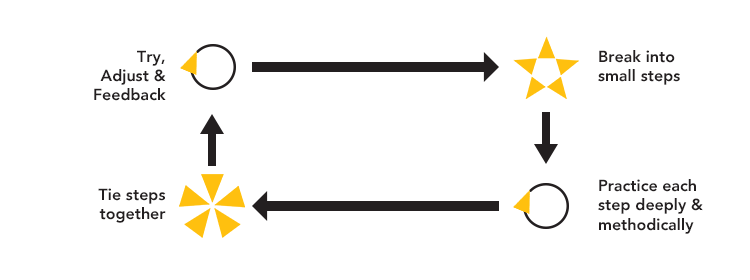
Mastering soft skills, such as empathy, emotional intelligence, and active listening, is key to success in sales and service. These skills foster strong customer connections and help create value-driven solutions. Deep practice, a focused approach to skill-building, involves breaking down complex tasks outside of a person’s comfort zone into manageable steps and practising them intentionally and repeatedly. Sales and service professionals can refine their techniques through purposeful practice and immediate feedback. Leaders and coaches play a crucial role by guiding their teams through actionable steps, providing feedback, and fostering continuous improvement that translates into better performance.

In 2.5 minutes

Mastering …

Deep Practice – The Path to Soft Skills & Sales Mastery Read Post »

engage-relate-and-persuade-people

The Silent Coach

We’ve all seen the Business Development Managers (BDMs) who talk the talk of prospecting: they attend conferences, absorb sales advice, and quote best practices. Yet, when it’s time to act – to pick up the phone and engage – they hesitate. As a result, their skills remain untapped, opportunities slip by, and their potential goes unrealised.

This scenario finds a surprising parallel in the world of sales management. Consider a sales manager, equipped with coaching skills and development tools, overseeing a team poised for support. This setup holds tremendous potential to unlock greatness within the team. However, much like the BDM …

The Silent Coach Read Post »

measuring-sales-performance

Sales Performance – what are we really measuring?

The prevalent way of measuring sales performance is a combination of KPIs. These include the obvious sales results, and a few others, like number of calls and meetings, new opportunities, etc.

However, longer sales cycles and more complex ways of selling like Solution Selling and Value Based Selling, or segmentation approaches like Strategic / Key Account Management demand a more sophisticated approach to measuring effectiveness. The biggest challenge when measuring the performance of our sales teams is how to measure quality rather than just quantity of sales results.

Leaders need to move from a deficiency orientation …

Sales Performance – what are we really measuring? Read Post »

train-sales-leaders-to-boost-sales-performance

Boost Sales Leadership to Boost Sales

Every business wants better sales performance from their salespeople and to have happy, loyal clients.

If you look at the overwhelming content online about sales problems and issues, it focuses mostly on salespeople and their performance.

But what about Sales Leadership?

Sales Leaders are given little support when it comes to being competent in their role. In fact, many Sales Leaders are given no formal training in sales management, leadership, or coaching.

Perhaps the way to solve the problem of ‘better sales performance’ is to start by raising the standards of our sales leaders so they can lead and manage their sales teams better.

These …

Boost Sales Leadership to Boost Sales Read Post »

putting-the-trainer-back-into-sales-management

Putting the Trainer back into Sales Management

Blog Podcast

Your browser does not support other methods, please download it.

  Download (use ‘right click’ then ‘save as’) 

Training salespeople is vital to healthy and sustainable sales performance. With markets becoming more complex and changing at rapid rates, ongoing development measures are imperative to help salespeople stay up to date and effective. Training needs to be periodic for it to have any effect. Regular ‘mini’ training sessions in short, sharp bursts combined with one-on-one coaching in the field makes for better and better sales …

Putting the Trainer back into Sales Management Read Post »

Scroll to Top