
In 30 seconds
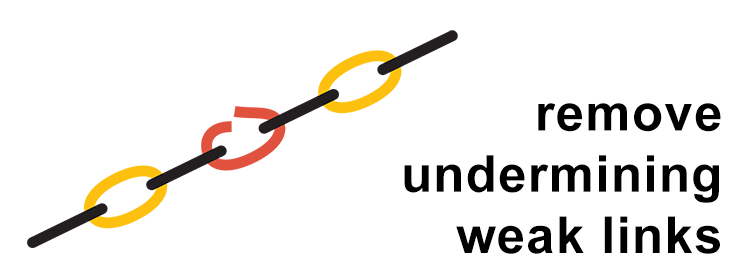
Watch who you let near your mind. Professor Will Felps proved what leaders have long suspected: a single toxic team member can reduce overall performance by 30 to 40 per cent, even when everyone else is capable and motivated. Let’s face it, we’ve all had to remove some bad apples from our teams. The fear is real: losing their contribution, upsetting clients. But the relief is palpable when they have gone. Teams rally. Clients stay, often grateful for the change. Your ability to foster authentic human connection is your sustainable advantage. But you must actively protect it by calling out bad behaviour and refusing to tolerate the intolerant. Team effectiveness depends less on strong performers and more on removing the weak links undermining everyone else. Protect your culture. Everything else follows.
In 2 minutes
Watch who you let near your mind.
This old warning carries new weight in today’s workplace. Because whilst we obsess over hiring top performers and developing high-potential talent, research reveals something far more critical: a single toxic team member can sabotage everything you’ve built.
Many leaders would have suspected this truth. They’ve watched their teams struggle under the weight of one difficult person. They’ve felt the tension, seen the eye rolls, heard the sarcastic comments. But many have hesitated to act, often for fear of losing that person’s contribution.
Professor Will Felps decided to prove what many leaders already knew intuitively.
In his groundbreaking 2006 experiment at the University of Washington, Felps divided students into groups of four and gave them 45 minutes to solve management problems. Some groups had “special guests” planted among them, people playing very specific roles:
- The Indifferent One who scrolled through their phone, completely disengaged.
- The Sarcastic One who made cutting remarks like “Are you serious?”
- The Pessimist who constantly doubted whether the task could even be solved.
The results confirmed what leaders had long suspected. Even when the other three members were motivated and highly capable, the presence of just one unconstructive team member reduced the group’s overall performance by 30 to 40 per cent.
One person. Nearly half your team’s potential, gone.
Since then more research has been conducted on the causes and effects of “bad apples”, especially the ripple effect on employee well-being, employee turnover or creativity and psychological safety, all confirming the initial findings.
A special kind of “bad apple” – The Sales Gorilla Syndrome
Back in 2010, I wrote about a particular breed of bad apple: the 600lb sales gorilla (apologies to actual gorillas). The article struck a nerve. Leaders from across industries shared their stories of top sales performers whose toxic behaviour was slowly poisoning their teams.
These were the prima donnas who delivered results but left destruction in their wake. They had the ear of the CEO. They refused to be coached. They used intimidation to get their way with internal teams and charm to manipulate key stakeholders. They wouldn’t let the business near their customers and acted with righteous indignation if anyone questioned their methods.
Management tolerated them because of their sales numbers. The smell of money they brought in somehow condoned behaviour that outweighed the need to act ethically and uphold team values. “Oh, let him get away with it. Look at the results he pulls in.”
Here’s what I learned from the deluge of responses: when these sales gorillas finally departed, there was initial shock which quickly gave way to relief. The biggest fear -losing their sales power and their clients- didn’t eventuate. Sales teams and clients were often happy the sales gorilla had left and looked forward to more open, prosperous relationships. Sales grew even more.
Why This Matters Now
This issue is more critical than ever because while technology can automate outreach, it cannot replicate the essential human dynamics of trust and psychological safety. Our philosophy has always been that everybody is in the business of influence, and that influence begins with conversation. But those conversations only work when people feel safe enough to contribute their best thinking. A toxic team member destroys that safety, and technology only amplifies what’s already there: no amount of digital transformation will save a poisoned culture.
Where Your Real Leverage Lies
Your true leverage isn’t just developing top performers; it’s fostering a healthy culture where they can flourish. This means actively calling out bad behaviour and recognising that keeping a technically brilliant but toxic person is a false economy. Your silence on these matters sends a clear message about what you truly value. Real superstars drive sustainable results because they are collaborative, curious, and team-oriented: the opposite of the toxic ‘gorilla’.
The Hard Decisions
Over 30 years in business, I’ve had to remove some bad apples from my own team. It’s never easy. The fear is real: what if we lose their contribution? What if clients leave? What if we can’t replace them?
In my experience, and now backed by solid research, the answers might surprise you. The relief is palpable. The team rallies. The clients stay, often grateful for the change. And the culture you’ve fought to build finally has room to breathe.
Ethical companies attract better talent, command premium pricing and build loyalty that algorithms cannot replicate. But you must actively protect the environment that makes this possible.
The Bottom Line
Team effectiveness depends less on the number of strong performers and more on whether there’s even a single weak link undermining everything else.
So, ask yourself: Are you letting fear hold you and your team hostage? What would happen if your bad apple left? How would the rest of your team respond?
Watch who you let near your mind. And watch who you let near your team’s collective mind even more carefully.
Because selling better, leading better and performing better all start with the same foundation: trust-based relationships where people can do their best work.
Protect that. Everything else follows.