
sales-telemetry-why-excellence-lives-in-273-micro-steps

Sales Telemetry: Why Excellence Lives in 273 Micro-Steps

In 30 seconds

The Problem: Traditional “hero” sales models are fragile and unscalable. Personality-driven approaches leave organisations vulnerable when stars leave, and oversimplifying complex B2B sales creates more chaos, not less.

The Shift: Ashby’s Law of Requisite Variety proves you cannot manage high complexity with low-resolution processes. Modern B2B sales: with 10+ stakeholders, year-long cycles, and hybrid engagement, demands sophisticated internal systems matching external complexity.

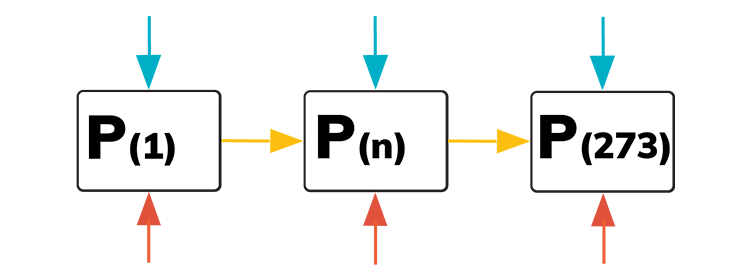
The Solution: High-resolution sales process mapping (273 micro-steps) creates telemetry, not bureaucracy. Like Formula One’s data systems, it makes invisible complexity visible, enabling measurable, trainable, scalable excellence. Your team already navigates these steps blindly; proper structure transforms overwhelm into flow state performance.

Sales Telemetry: Why Excellence Lives in 273 Micro-Steps Read Post »

put-structure-around-complexity-use-complexity-as-strength

The Simplicity Trap: Why Reducing Complexity Makes Selling Harder, Not Easier

In 30 seconds

The Problem: Leaders confuse complexity with clutter. They think “making life easier” means cutting steps and removing structure. Result? They create a vacuum where chaos takes over. Teams aren’t working less – they’re exhausted navigating disorder without a map. Every shortcut creates downstream complexity worse than what was removed.

The Shift:  F1 drivers hit 350km/h guided by 300+ telemetry data points. They don’t reduce complexity – they structure it. That framework makes the impossible possible. Entropy is the natural state; left alone, things fall apart, not organise.

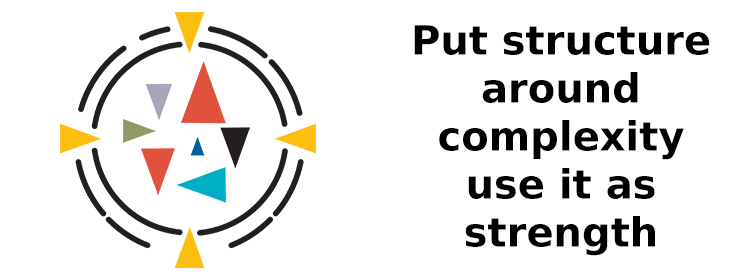
The Solution: Put structure underneath complexity, don’t eliminate it. Build clear sales frameworks that eliminate guesswork, defined sales processes that reduce decision fatigue, and structured feedback loops. With discipline comes freedom. True simplicity isn’t found by subtraction – it’s engineered through disciplined structure.

The Simplicity Trap: Why Reducing Complexity Makes Selling Harder, Not Easier Read Post »

stop-start-keep

Reflect, Adapt, and Succeed: The Stop-Start-Keep Approach

In 30 seconds

It’s the end of the financial year in Australia, and it’s a good time to recognise our successes and reflect on what we’ve learned on the financial year 22/23.

At Barrett we use the “Stop, Start and Keep doing” tool:

  • Stop – What do I/we want to Stop Doing? Identify practices, behaviours, or processes that don’t work for you/your team. This way you can phase it out.
  • Start – What do I/we want to Start Doing? Identify new practices, behaviours, thoughts, or processes that could bring positive change.
  • Keep doing: What do I/we want to Keep Doing? Acknowledge what works and successes …
  • Reflect, Adapt, and Succeed: The Stop-Start-Keep Approach Read Post »

    From Personality Cults to Sales Process Maps: Rethinking Sales Success

    In 30 seconds

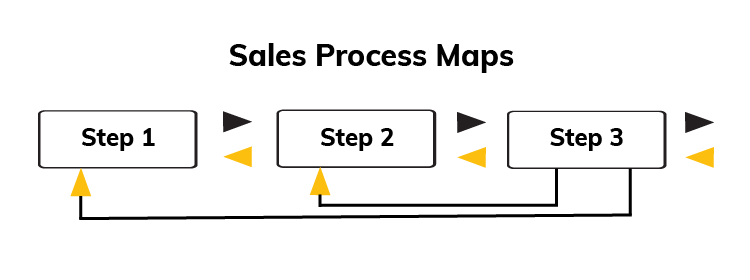
    Sales success has long been built around personalities, leaving new salespeople to emulate revered individuals without much success. A well-defined sales process is a quicker and more effective way to get new hires up to speed. A sales process map outlines the steps, activities, tasks, and behaviours of how your business sells and services. By incorporating the best practices of your top salespeople and aligning them with your sales strategy, you empower new hires to adopt and make the process their own. This approach allows them to observe successful salespeople applying the process, assess their own competence, and …

    From Personality Cults to Sales Process Maps: Rethinking Sales Success Read Post »

    selling-better-faster-sales-training-case-studies

    Selling Better Faster – Sales Training Case Studies

    When you roll out effective, ethical, human-centred sales training programs to your sales and client facing teams spread out over time really good things happen to your people and your clients, and of course your sales results.

    At Barrett, we have any number of Selling Better transformation programs on the go across a range of industries and business types including big corporates with 1,000s of people through to teams of 5-10 made up of seasoned sales veterans and leaders to people brand new to sales. And what we get on a weekly basis are Selling Better stories from the field about …

    Selling Better Faster – Sales Training Case Studies Read Post »

    measuring-sales-performance

    Sales Performance – what are we really measuring?

    The prevalent way of measuring sales performance is a combination of KPIs. These include the obvious sales results, and a few others, like number of calls and meetings, new opportunities, etc.

    However, longer sales cycles and more complex ways of selling like Solution Selling and Value Based Selling, or segmentation approaches like Strategic / Key Account Management demand a more sophisticated approach to measuring effectiveness. The biggest challenge when measuring the performance of our sales teams is how to measure quality rather than just quantity of sales results.

    Leaders need to move from a deficiency orientation …

    Sales Performance – what are we really measuring? Read Post »

    train-sales-leaders-to-boost-sales-performance

    Boost Sales Leadership to Boost Sales

    Every business wants better sales performance from their salespeople and to have happy, loyal clients.

    If you look at the overwhelming content online about sales problems and issues, it focuses mostly on salespeople and their performance.

    But what about Sales Leadership?

    Sales Leaders are given little support when it comes to being competent in their role. In fact, many Sales Leaders are given no formal training in sales management, leadership, or coaching.

    Perhaps the way to solve the problem of ‘better sales performance’ is to start by raising the standards of our sales leaders so they can lead and manage their sales teams better.

    These …

    Boost Sales Leadership to Boost Sales Read Post »

    assess-your-sales-operations

    5 minutes to assess your sales operations

    Sales operations are complex systems with many moving parts. So, when we are not getting the sales results that we expect, it’s easy to misdiagnose the cause (or causes) of the problem.

    Traditionally, sales leaders, and sometimes Learning and Development professionals, equate poor sales performance to lack of skill and/or will within the sales team and so the obvious solution is sales training. However, more often than not, lack of sales skill and/or will is only part of the problem.

    Here are the most common issues we find in sales operations that negatively affect sales results:

    5 minutes to assess your sales operations Read Post »

    Scroll to Top