
In 30 seconds
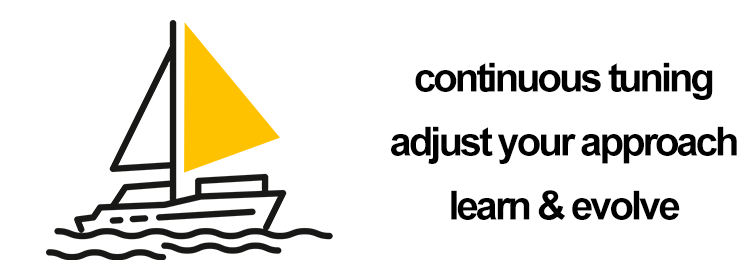
Thirty years ago, we chose selling better over selling more. The philosophy? Adaptation, evolution, and progress. Think of a sailboat captain constantly adjusting sails to changing winds. That’s human-centred selling. Your clients aren’t machines, they interpret messages through emotions, context, and experience. What you intend isn’t always what’s received. Perfection doesn’t exist in human interaction. Instead, focus on continuous tuning. Read the signals. Adjust your approach. Learn and evolve. A stationary boat can’t be steered. Keep moving forward, adapting as you go. That’s selling better. That’s sustainable growth. That’s putting humanity back into business.
In 2 minutes
Why Approximation Beats Perfection in Business Communication
Thirty years ago, we took the road less travelled. Instead of chasing “selling more,” we asked a different question: what does selling better look like? The answer wasn’t about perfect scripts or foolproof techniques. It was about adaptation, evolution, and progress. It was about recognising that human-centred, ethical selling requires constant tuning, not rigid perfection.
Today, this matters more than ever for business and sales teams navigating increasingly complex client relationships.
The Sailboat Principle
Imagine a sailboat navigating through changing winds and currents. The captain sets a course (your intended message or behaviour), but they can’t control every ripple or gust. Instead, they constantly adjust the sails, read the wind, and check the compass. They never expect a perfectly straight line to their destination, but they continually strive to get closer.
This is selling better in action. It’s about adaptation, not perfection. Evolution, not stagnation. Progress, not predetermined outcomes.
Why Perfect Doesn’t Exist in Human Interaction
Here’s what three decades of studying ethical, human-centred sales has taught us: people aren’t machines. Your client interprets your message through complex filters – their current pressures, past experiences, emotional state, and organisational context. What you intend to communicate isn’t always what gets received.
You might demonstrate confidence; they perceive pushiness. You provide thorough information; they feel overwhelmed. This gap between intention and perception is where relationships are built or broken.
For too long, sales training has sold an illusion: that perfect execution guarantees perfect results. Follow the script. Use these phrases. Do these steps. But this personality-driven approach ignores a fundamental truth: selling is a system, not a set of tricks. And systems need constant calibration.
The Selling Better Approach to Adaptation
Our approach isn’t about finding the “right” technique and repeating it endlessly. It’s systems thinking applied to sales. It’s recognising that genuine client-centric cultures don’t emerge from perfect pitches—they emerge from teams that know how to read signals, adapt their approach, and treat people with dignity and respect throughout the process.
This means:
- Continuous tuning, not switch-flipping. Every interaction provides feedback. Your prospect leans back when you mention pricing? That’s data. Their questions shift from features to implementation? The wind has changed. Adjust your sails. Don’t abandon your destination, find a better route to reach it.
- Progress over perfection. After a meeting that didn’t go as planned, ask: what did I learn? What signals did I notice or miss? How can I adapt? This is evolution in practice. You’re not failing when things don’t go perfectly; you’re gathering intelligence for the next iteration.
- Systems over personality. While individual skill matters, sustainable sales growth comes from well-engineered systems that your entire team can use. Training is a part of the solution, not the entire solution. When your approach is system-based rather than personality-driven, adaptation becomes organisational capability, not individual heroics.
Keep Your Boat Moving
Here’s what sailboat captains know: a stationary boat can’t be steered. You need forward momentum to make adjustments. In business terms, this means taking action, getting feedback, and adapting. Waiting for perfect conditions or the perfect approach means you’re not moving at all.
This philosophy –selling better through constant adaptation– has guided our work for three decades. It’s about reclaiming the true essence of selling: building viable, profitable client relationships through ethical, human-centred interactions.
The Path Forward
The wind will change. Client needs will evolve. Market conditions will shift. That’s not a problem to solve, it’s the environment you work in.
Your goal isn’t perfection or predictability. It’s building the capability to adapt. It’s creating client-centric cultures where your team knows how to read situations, adjust approaches, and keep progressing toward meaningful outcomes.
Master the art of continuous adjustment, and you’ll navigate successfully. Not because you got it perfect, but because you kept evolving, adapting, and moving forward.
That’s selling better. That’s progress.