
q

Time for reflection and recharging

April 21, 2011 in Emotional Intelligence, Tips, Wellbeing Support Services

With this holiday period upon us, many of us take time to rest from the busyness of our daily work lives and spend time with the people we love the most. Often time this space can allow us to reflect on our lives, review what is important to us and appreciate those close to us. For some they can simply feel exhausted and just which to lie still in time to recover for the next busy schedule.

With a 24/7 life style we can often get caught up in being ‘ON’ all the time however if we do not take time to rest and reflect we diminish our capacity to be and work at our best. The research is very clear that getting a good night’s sleep is critical to healthy brain and body function. The research is also showing that learning how to manage our thoughts and become more mindful is critical to our resilience; our ability to bounce back especially after setbacks.

The many people we work with on a daily basis via our training and coaching, are increasingly wanting to learn how to reflect, be still and be more resilient. We are being asked to teach more and more people how to meditate and become more mindful.

Rather than discuss the theories around reflection, meditation and mindfulness and have your thinking too much over this holiday break we would rather give you a small gift this holiday period – the gift of meditation which can hopefully bring peace and happiness to your busy world.

We have developed a series of short meditations for Leaders, Executives and Salespeople which form part of our series The Mindful Leader.

Meditation is a skill – a very valuable skill. The purpose of meditation is to heal and transform. The skill and practice of meditation has been in the realm of the human experience for thousands of years. Because meditation is a skill you can practice meditation anywhere at any time. In every moment you can chose to meditate. There are many forms of meditation ranging from seated meditations, silent meditations, walking meditations, guided meditations to prayer and living one’s life a in a state of continuous mindful meditation. Seated meditation is the most well known and practiced form of meditation.

This meditation is designed to help you look at possibilities and be aware that many opportunities are available to you.

Preparation: Sit in a quiet spot, preferably is a straight backed chair with your feet flat on the ground and your hands resting comfortably in your lap. Image you spine is like a stack of coins neatly placed on top of each other and your head is slightly titled forward in a restful but alert position. Take some deep breaths breathing down into your belly. Breathe in through your nose and out through your mouth finding a comfortable breathing rhythm. Then quietly read out loud the following guided meditation or have someone read it for you.

Exercise 3 – Seeing possibilities

1 Aware that I am born into a universe of infinite possibilities I breath in

Seeing possibilities in everything I breath out

universe of infinite possibilities

seeing possibilities

2 Focusing on my current state of mind I breath in

Aware of the possibilities that have made up my current state of mind I breath out

current state of mind

possibilities that make up my mind

3 Focusing on the contents of my mind I breath in

Aware of the possibilities that have made up the contents of my mind I breath out

contents of mind

possibilities that make up my mind

4 Aware of my current beliefs I breath in

Aware of the possibilities of beliefs I breath out

current beliefs

possibilities of beliefs

5 Aware of any beliefs that keep me from seeing possibilities I breath in

Reframing those beliefs so I can see more possibilities I breath out

limiting beliefs

reframing beliefs

6 Aware of any frustrations that keep me from seeing possibilities I breath in

Letting go of any frustration that keep me from seeing possibilities I breath out

frustrations

letting go of frustrations

7 Aware of judging others’ ideas and suggestions I breath in

Letting go of judgments about others’ ideas and suggestions I breath out

aware of judging others

letting go of judgments

8 Aware of judging my own ideas and suggestions I breath in

Letting go of any judgments I breath out

aware of judging myself

letting go of judgments

9 Aware that I am born into a universe of infinite possibilities I breath in

Seeing possibilities in everything I breath out

universe of infinite possibilities

seeing possibilities

This exercise is simply designed to allow you to stop and reflect so you are in a position to see possibilities. If you struggle with limited thinking and feel blocked this may help you see what is possible.

We welcome your feedback on this exercise and any other enquiries you might have in relation to developing the skills of mindfulness and meditation practice.

Thank you again for your support of loyal readership we wish you all the very best of this holiday period.

Remember everybody lives by selling something.
Author: Sue Barrett, MD of www.barrett.com.au

Can a sales manager be an effective sales coach?

April 14, 2011 in Coaching, Performance Management, Sales Leadership, Sales Management, Sales Talent, Sales Training, Success

Coaching usually focuses on two areas of development to achieve excellence: skills and performance. Excellence in performance is knowing the right processes to apply in the right situation, coupled with the personal insight to know how to apply them wisely.  An effective sales coach is there to help people achieve excellence and realize many more benefits.

However to be an effective sales coach your people must experience you as a support in helping them achieve higher performance and not a hindrance.  Often people experience performance improvement initiatives as ‘threats’ or ‘aimless chats’ leaving people feeling negative, intimidated or that their time has been wasted.

For coaching to work at its best the relationship between coach and coachee must be one of partnership with trust, safety and minimal pressure.  The pay cheque, promotion and performance axe have no place in a coaching relationship.  Often, sales managers  don’t know the difference between managing and coaching and find it hard to change hats when required. So can a sales manager reconcile the roles of manager and coach and can a manager really be an effective coach especially given time pressures and other competing priorities?

Barrett’s newly appointed Head of Coaching, Robyn Creed says ‘Yes, managers and especially sales managers can be fantastic coaches, however coaching demands the highest qualities of a manager.’

“Qualities include active listening, empathy, integrity, honesty, detachment and effective questioning. Coupled with this is a willingness to adopt a ‘performance enhancing’ mindset to staff development along with the skillful use of best practice coaching tools and frameworks.  True coaches help people liberate their talent to realise mastery.   Being able to set yourself a part from your managerial duties i.e. the KPI agenda, delivery of strategy, results, and firefighting and instead, approach each staff member as an individual when coaching, allows you to build a genuine coaching relationship.  Creating a coaching climate can be a challenge for many managers mainly due to time constraints, competing priorities which often relegate coaching to  ‘nice-to-have’ status, and the lack of proper training in effective coaching tools and strategies,’ Robyn said.

So how can a sales manager reconcile the roles of manager and coach? Knowing the difference helps. Review the following checklist on Managing and Coaching and see where you fall in relation to these roles.

Managers:
•    Do most of the talking and directing
•    Tell people how things should be done
•    Fix problems – sometimes preventing staff members from developing necessary skills
•    Presumes and makes assumptions (not having delved deeply into what is going on for an individual)
•    Seek control
•    Order people, provide directions
•    Works on
•    Keep distant
•    Assign blame

Coaches:
•    Spend most of the time in a coaching discussion listening to their staff member
•    Ask people how they think things should be
•    Prevent problems – when appropriate, skill people up to develop skills to manage situations effectively
•    Explore, providing staff with in-depth insight around a particular situation or what is going on with an individual)
•    Empower team member and seeks commitment
•    Allow people to develop their own path, but challenges when necessary
•    Work with (partnerships to develop skills and improve performance)
•    Make contact
•    Take responsibility (those who understand the importance of coaching appreciate the direct link between their coaching of their staff and their staff’s performance)

Many sales managers we work with have reviewed this list and realise they are not coaching at all.  At best they have chats over coffee which is not the same as coaching.  Yet they are ever concerned that their people may not be performing to the standard they require.

In 2005, the Sales Executive Council conducted a survey of over 3000 Sales Professionals and their sales managers. Some of their findings clearly demonstrate the difference in sales professionals’ performance based on the effectiveness of coaching.  In this study there was at least 19% improvement in sales performance as a direct result of one-on-one coaching which meant the difference between people achieving their sales quotas or not.

Recent results from ICF Consumer Global Awareness Study reported that more than 42.6% of the respondents who had experienced coaching chose “Optimise individual and/or team performance” as their motivation for being coached.  This reason ranked highest followed by “Expand professional career opportunities” at 38.8% followed by “Improve business management strategies” at 36.1%. Other more personalised motivations like “Increase self-esteem/self-confidence” and “Manage work/life balance” rated fourth and fifth to round out the top five motivations.

Coaching is key to performance improvement in any role.   So why isn’t coaching prevalent in the daily lives of sales leaders and managers?

Lack of time is usually the issue.  Finding time to coach is a real issue for these managers. Too many managers find themselves firefighting, unable to devote sufficient time to long term planning, visioning and most importantly coaching and developing their people. The paradox here is that if they coach their staff properly the staff will be capable of shouldering more responsibility, freeing the manager from firefighting and allowing them to be available to manage and coach their people and grow and develop the business.

So how do we get managers to engage in coaching?

Help sales managers see the real value in coaching including the dollars and sales it can return to the business.  We need to help  managers see that coaching delivers far more than the effort put into coaching however, if you have never experienced effective coaching you are unlikely to value it.  One solution is for managers to experience professional coaching themselves and see how it helps them achieve excellence in their own role.  Engaging an independent coach to work with a manager i.e. a ‘coach-the-coach’ experience has great benefits.  Ideally sales managers would be trained in best practice coaching tools and strategies to give them the confidence and competence to coach.  Another solution some managers are resorting to is outsourcing the coaching of their team members to independent coaches or internal people specifically trained and assigned to a coaching role thus leaving managers to manage.   This is a trend in some industries such as call centres.

Robyn Creed says that outsourcing  authentic coaching can really help people experience an agenda free environment helping them to shift and move to higher levels of performance without the complicated relationship of their managers.  However, she does warn that abdicating coaching responsibilities as a manager is dangerous.  ‘Managers should not avoid coaching’ says Robyn, ’The skills and mindset of coaching need to be ever present in a manager’s tool box, especially in sales. The opportunities to coach present themselves at any time and you have to be ready to seize the opportunity and know what to do.’  Robyn’s advice is to adopt a blended approach: ‘train your sales managers and other managers how to be effective coaches and then, when needed supplement this with highly trained external coaches.  These coaches are best used to coach the managers who are coaching their own teams as well as for high performing sales people who need that to move to a higher plain.’

Remember everybody lives by selling something.

Author: Sue Barrett, MD of www.barrett.com.au

Exceptional Prospecting and Social Media

April 7, 2011 in Call Reluctance, Communication, Prospecting, Self Promotion, Social Media, Social Sales, Tips

With social networking sites and the plethora of online data available, 2011 presents us with better quality prospecting and more qualified prospects.  ‘Prospecting and Social Media’ was voted as the Number 4 Sales Trends for 2011. Business networking sites such as LinkedIn and Plaxo, and the emergence of Facebook and Twitter as business destinations, give the discerning business or sales person access to quality data where they can research key contacts with an organisation, as well as business activity. Then, when appropriate, they can use this data to make professional connections.

Smart business leaders and sales people are using social networking sites as tools to engage in better quality prospecting and improve conversion rates rather than just using them to make a list of prospects.  These sites potentially make redundant, the concept of Cold Calling and the fear of prospecting and can help people become exceptional prospectors. So how do you get the best out of Social Networking sites when prospecting? Let’s look at the business phenomenon that is LinkedIn.

LinkedIn

For Business to Business prospecting, LinkedIn is proving to be a rich source of information, contacts,  suppliers, prospects, referrals and clients.  It has exploded in connections and content, and usage has skyrocketed in the last 18 months through its many features helping you get connected to the right people.  It is the largest B2B social media networking group in the world.  For instance my own LinkedIn profile and network currently can connect me with over 5,200,000+ contacts, imagine how we could all harness the power of these connections.  So how do you use LinkedIn to help you prospect more effectively?

Step 1: Develop a sales plan, clear message and profile
Before you set up your LinkedIn profile make sure you have a clear sales plan which identifies who you need to be connecting with i.e. types of clients, suppliers, peers, industry sources and groups. Think about what you want to present by way of image, message and purpose i.e. what do you stand for? What do you do for people?  Look at how you would like to position yourself as a business professional.  Like websites, your LinkedIn profile is your professional resume online; it represents your professional brand.  This is why you need to be clear about who you are, what you do and what you want to communicate to a broad audience.  What you do, what your company does, what you represent, people are likely to make up their mind about you based on what they see and read about you.  Your LinkedIn profile should form part of your sales and marketing strategy.

Step 2: Join LinkedIn
Get your profile up and live. It’s easy and it’s free – go to www.linkedin.com and get started.  There are also various levels you can subscribe to enhance your profile and get you better connected with search features and other options.  These extras come with a monthly fee attached.  Begin by using the free access option and try it out before committing to upgrades.

Step 3: Join LinkedIn Groups
There are many and varied LinkedIn Groups you can join. These groups provide people with forums to discuss and exchange ideas and opinion, as well as keep up to date on the latest trends, ideas, innovations, etc.  It’s also where buyers are increasingly looking to research suppliers before they buy.  They are looking for what others say about you and your products or your industry.  They can compare you with your competitors’ offerings.  In these groups you can listen to what your customers are saying before they even decide to talk to you. Your sales strategy should guide you as to who you should be in contact with.  What types of groups would be useful for you to belong to? For instance if you are a Learning and Development specialist, Engineering sales professional, Environmentalist or Procurement Manager then there are groups focusing in these spaces and many more.  But do not limit yourself to the narrow bandwidth of your own expertise. Often looking outside your comfort zone can give you access to new ideas and contacts as well.  These groups allow you to listen to your community, suppliers, clients and other interested parties. This gives you access to a wide range of people.  See Barrett Consulting Group LinkedIn group as an example.  A word of caution: Do not blatantly self promote or advertise your wares in these groups; it will not go down well.  If you try to blatantly self promote and prospect in these groups you will be shunned and often kicked off the group.

Step 4: Start to connect
The best way to build up your network of contacts is to invite people you know to connect with you.  This way you can begin to build up direct connections who, in turn, can then give you access to people outside of your direct network.  You can often look at your contacts list of connections and you can see who might be good to make contact with.  It’s advised that you don’t contact someone you do not know directly without some form of personal connection or link; instead, you can seek an introduction through one of your direct contacts.  Sending out LinkedIn requests to people at random will not be seen as good business and will be deemed inappropriate or spam by many and may affect your reputation.   It is also wise to be discerning about which connections you accept as well.  Don’t just accept invitations from anyone, make sure you find out why they want to connect with and how you can be of best service to each other.

Step 5: Identify and Research Your Prospects
If you are already connected on LinkedIn and you know what types of people you need to prospect to you can look through your contacts lists to see who is there.  You can also develop a list of names of people who are in your target market via business websites which often have names of key contacts or business news sites and industry magazines which often feature key decision makers.  Your own CRM or client database should have lots of names you need to speak to.  And of course you can buy lists once you are on LinkedIn and begin to research your prospects.  In the upper right hand corner, there is a search box with a pull down menu. Click on that and you’ll see six options (people, jobs, companies, answers, inbox, groups). Click on “people” and enter the prospect’s name. You can see a lot of information about prospects, the groups they belong to, what they are interested in, their experience and knowledge, etc.  You can use a prospect’s background to develop questions that relate to their area of responsibility. It will help you to develop very clear Valid Business Reasons (VBR’s) when calling them.   Make sure you know how to get prospects to talk to you.

Step 6: Start Prospecting
Develop a list of 20 to 40 prospects per week and then make contact via the telephone as you would normally do.  Use relevant VBR’s to help you connect. Pretty soon you will be making contact with the viable prospects and on your way to making more sales.  If you are still not comfortable calling people via the phone you can use Linkedin as a prospecting option however make sure that you still use a VBR  in your message or invitation to them.

Summary
Does this mean you will learn everything about a person via their profile or that you take a carte blanche approach to prospecting? NO. We will need to be mindful about how we go about making contact as we will still need to engage in skillful prospecting activities to position ourselves effectively. Remember information is not POWER it is potential power. LinkedIn and other social media networks are not the only sources for prospecting but they certainly can help you achieve peak performance in prospecting.

With clear sales plans and well defined prospect profiles there’s no excuse NOT to prospect effectively.  2011 will be about a Total Quality Prospecting environment.

Remember everybody lives by selling something.

Author: Sue Barrett, MD of www.barrett.com.au

Should ‘Selling’ be studied at University?

March 30, 2011 in Coaching, Education, Sales Research, Sales Training, Self Development, Success

Barrett Research invites you to express your opinion about whether ‘Selling’ should be an applied academic degree.  Please complete our Graduate Degree for the Sales Profession’ survey and voice your views.

With the profession of Selling becoming increasingly more complex involving many more variables and the shift from product being at the heart of selling to strategic relationships, collaboration, true value, sustainability and transparency now on the agenda we believe it’s time for ‘Selling’ to step out under the shadow of Marketing and MBA’s to have its own degree status.  Recently I was invited to speak at the Melbourne Business School’s MBA Entrepreneurs program on the topic of Selling.   This was a great opportunity to put the topic of Selling on the agenda.   The feedback was phenomenal – the mostly young students had many questions that needed answers to ranging from how to sell effectively, prospecting, what it the right way to sell, and the right sales mindset to name a few.

The emphasis was on the practical as well as the theoretical. Their concerns about having the Sales function and Sales Processes operating effectively in their start-ups and growing businesses were along the same lines as the questions many seasoned business owners and leaders ask every day.  They were quite unaware just how much you need to know, learn and apply when it comes to selling, running a sales team and keeping up or ahead of your market on the sales front, especially now that social media is now making such an impact on sales and marketing.

While selling strategies have been around for years the actual function of being a sales person and sales leader have been poorly regarded and understood, however in recent years there has been a growing body shining light on sales as a complex and skilful profession with most of the academic work emanating from overseas.  In Australia, there are currently topics or short courses (i.e. up to 7 hours duration) on the topic of selling at some Australian universities, however, they are not very comprehensive and do not cover all the aspects of Selling a skilled professional needs to know.  There are certainly no Degrees in Selling in Australia.  We understand that knowing how to sell effectively doesn’t happen until you get out in the field and start applying it, however, being well trained in the science of selling and understanding its many variables would help most people and businesses make a much better start.   At last count there are 42 universities in the US with graduate and undergraduate sales courses on their curriculum.

At Barrett Research we view Selling as an applied science where it fits perfectly well into a business school framework and so do not see it on the pure end of academic education.   I believe we need more accredited courses or at least dedicated business courses where people can properly study the science and art of Selling.  Having tertiary trained sales professionals would certainly raise the standards of the profession.

We can take a leaf out of the procurement industry which is the fastest growing business profession. CIPSA has worked tirelessly to professionalise ‘purchasing’ and rightly so, given the enormous complexity facing the profession. There are now tertiary qualifications including degrees and post graduate programs in procurement.

To complete the survey, go to: ‘Graduate Degree for the Sales Profession’ survey

We will publish our survey findings soon.

Remember everybody lives by selling something.
Author: Sue Barrett, MD of  www.barrett.com.au, a Sales Training firm.

What are the 3 Sales Essentials that make for effective selling?

March 24, 2011 in Communication, Prospecting, Sales Planning, Sales Skills, Sales Training

When we meet with leaders to discuss their sales challenges in achieving sales effectiveness we find that the source of their problems often stem from three key areas: sales planning, sales prospecting and effective sales communication with clients.

Whatever our vocation, we all need to make contact with and communicate effectively to secure the ongoing custom of members, supporters, sponsors or clients to make a living.  Yet too many people still leave selling to chance.  They do not have a robust sales process in place that works for them or their business, product or service.

Because this optimal process is not internally articulated, Sales Managers are often left unable to teach and transfer the necessary thinking, skills, knowledge and frameworks needed for effective and sustained sales performance.  These processes have not been mapped in a logical and easy to follow process.  Instead, they often rely on experienced and successful sales people who sell by intuition and cannot explain what they do that makes them good at what they do.

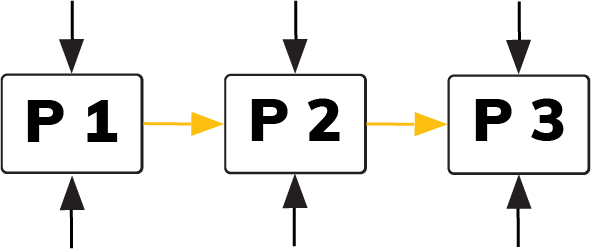
For 16 years we have been putting Selling under the microscope and have been mapping the knowledge, skills and insights needed for successful selling into three essential processes that set the foundations of much of the work we do with clients:

  1. A Sales Planning process – to create an actionable Go-to-market sales plan
  2. A Sales Prospecting process – to prospect successfully
  3. A Sales Communication process – to have productive dialogues with clients and prospects

When sales people and their managers are provided with these documented processes and taught how to use them competently and confidently, we find a dramatic shift in sales capability and sales performance.  These three essential sales processes are the foundations to an effective sales team. They are not everything a sales team must know to be effective but without these three sales essentials in place sales success is left to chance.  Delivered to sales teams in an interactive way where they can learn the processes whilst applying them to their business is the best way to get traction.  Then reinforcing these processes with follow up sessions and targeted coaching means that these sales essentials have a chance of becoming a ‘way of life’ rather than a fad.

At the very least your sales people should be able to:

  • Develop a Go-to-market sales action plan that tells you:
    • Who you need to be in front of
    • How you need to get in front of them
    • How often you need to do it to make it all worthwhile
  • Know how to make an effective prospecting call and prospect on a daily basis. It’s the first thing that has to happen if you want to make a sale.
  • Communicate effectively by asking people about their priorities, problems and objectives before you talk about yourself and what you have to offer.

When you give people what they need they start to get traction and grow.  Do yourself a favour and make sure you and your sales people are well equipped with the three sales essentials.

Remember everybody lives by selling something.
Author: Sue Barrett, MD of barrett.com.au a Sales Training firm.