
q

You are browsing the archive for Sales Results.

Questions deliver answers. What questions deliver sales?

May 15, 2013 in Attitudes & Behaviours, Education in Sales, Sales Results

It is well known that questions deliver answers.  The real question in sales is ‘What questions deliver sales results?’ 

Asking questions and listening are at the heart of any effective selling situation.  Questioning and listening are critical; without them you have salespeople conducting monologues to an audience of bored, disengaged, frustrated customers.  Any self-respecting sales person couldn’t image not asking questions in a sales situation, yet many well intentioned salespeople still fail to sell effectively because of poor question choices. 

is selling about making friends?

like me …

follow me …

tweet me …

poke me …

WHY?

Many salespeople describe themselves as ‘people people’ often entering a sales career filled with good intentions and under the false assumption that selling is about making friends, getting along with people and getting people to like you because when they like you, of course, they will buy from you.  Wrong.  People buy from people they TRUST and trust supersedes like.  The problem facing many salespeople who adopt the ‘like me and you will buy from me approach’ is that they specialise in ‘Social’ Questioning’, which revolves around their need for affiliation and not much else. You hear it all the time, salespeople being told that they need to build rapport by asking people about their personal lives, footy teams etc. This is very old fashioned and not as effective as people think it is. In fact for many first time client encounters it can be a real turn off for the client. It often comes across as fake. You will build more rapport by focusing on what you are really there to do – and that is work with client’s priorities and address their issues.  Of course it helps to be likeable but you need to build trust as a priority first and focusing on the client and what they want is the key. 

Successful salespeople specialise in ‘Opportunity’ Questioning. Here they are looking for evidence that opportunities exist for them to work on effectively with others. They are inquiring, curious and ideas oriented.  They are also asking questions to validate their clients.  It is their world they are interested in.  It is the sales person’s job to see how the client’s and the sales person’s worlds can intersect successfully – where they can find something of mutual value they can both work on for the benefit of both parties – the fair exchange of value, if you will.

In these instances questions are used to not only assist salespeople with gathering information about the customer i.e. their needs, situation, issues and priorities but also, when used effectively, assist the customer with coming to a clear understanding and realisation about what they need to do for themselves, hopefully with your assistance. customer-relationship For instance by practicing ‘Opportunity’ Questioning the salesperson can:

  1. Gain an understanding of the customer’s needs, priorities, issues, perceptions, prejudices, fears, etc.
  2. Come to have a deeper understanding of the customer’s buying motivators or intentions.
  3. Build genuine rapport and trust with the customer by listening effectively and demonstrating empathy towards their situation. Key is being able to see it from the client’s point of view.
  4. Probe deeper into their situation using effective questioning techniques that help the customer to see a greater, tangible need for your product or service.
  5. Establish what the consequences and opportunities are for the customer and how working with you will add value to them.

When we don’t ask ‘Opportunity’ questions we are at risk of accepting what we are told is true. This can then lead to all sorts of issues such as:

  • being told something is true when it is not
  • making assumptions and being caught out taking the wrong approach
  • being misled and losing out as a result
  • acting unwisely and causing harm to yourself or others
  • giving people what they don’t need
  • creating more problems than there were before

So next time you are out with your salespeople, or, if indeed you are a salesperson yourself, look at your approach to questioning. See what you are doing, what effect your questions are having on your clients and sales results.

Remember everybody lives by selling something.

Author: Sue Barrett, www.barrett.com.au 

Are your invisible sales managers losing you sales?

April 15, 2013 in Attitudes & Behaviours, Sales Leadership, Sales Management, Sales Results, Sales Skills

The number one priority for any sales manager is to lead and drive the effective sales performance of their sales team.  The only way a sales manager can achieve this is by being AVAILABLE and RESPONSIVE to his/her sales team.  What does this actually mean in real world terms?

working with your sales team

working with your sales team

This means getting out from behind your desk, ditching any excessive administration, leaving internal meetings and getting out in the field and working with your sales teams. If you want to drive and lift sales performance you need to be out in the field working with your sales teams at least 26-30 weeks a year.

That’s right, at least 26-30 weeks a year in the field!  The more time you are out in the field actively coaching and developing your team: working on deals together, helping them develop their sales/territory plans to find new markets or avenues into new or existing accounts, making sure they are skilful at selling, etc, the more sales you and your team will make.  NB: This does not mean that you do the selling for your sales team which is also another issue for another time.

Yet too many sales managers remain invisible to their sales teams.  Salespeople are lucky if they get any one-on-one time from their sales managers, let alone effective coaching and support.

WHY?

Because most sales managers in most organisations are being drowned in administrative paperwork, endless meetings and interference from other departments.  The following table is an excerpt from a recent large study undertaken by The Sales Management Association in the USA looking at Sales Management Activities. 

Sales Management Activities

Front line sales manager

Mid tier sales manager

Top level (senior) sales manager

Actual

Desired

Actual

Desired

Actual

Desired

Company administration

31%

10%

30%

11%

25%

12%

You can see already that the Actual versus Desired for company administration is way out of balance by a factor of 3 for the front line and mid tier sales manager – whose job is really to do that coaching and development in the field.  Sadly, on average only 26% of the sales managers’ time was actually spent in the field working with their sales teams.

This backs up other studies which have been undertaken over many years.  As we wrote recently, salespeople have a hard time getting enough real face time to sell because of other extraneous company activities put upon them.  And so it is with Sales Managers.  This is just one study of many showing how sales managers are being robbed of doing their real jobs.

So why is this happening?

obsessed with numbers

obsessed with numbers

Two reasons:

  1.  Over the years companies have been removing the sales support functions from sales managers and teams trying to cut overhead costs, saving money… the consequence is making the administrative work load for sales managers worse, robbing them of doing their real jobs.  I was reminded of a saying the other day: ‘you cannot save yourself rich’ 
  2. Obsessed with numbers, too many senior management teams are turning their sales leaders and, especially their field sales managers, into number crunching desk jockeys.   Time in motion studies reveal that each level of sales management spends more than 50% of their time with other internal functions instead of in the trenches with their sales teams and customers.

The consequence is that most sales managers’ time allocation is inefficient, leading to lost sales and poor growth. However, most sales managers believe their time should be weighted more to customer and market facing activities. With less time spent on administration. No surprise really.

Findings also show that the more sales managers are in the field working with their salespeople on customer and market activities the more positively this is correlated with sales growth.

The root cause for sales management inefficient time allocation is directly correlated to senior management influences.

So how do you change this?

Like freeing sales people up to have more live selling time, businesses need to free up their sales managers to have more field time with their sales teams.

Organisation should mandate that sales managers spend time in the field with their sales people in the real market place. The figures below are what is recommended for a full time sales manager:

  • 3 days/week in the field for mid tier sales managers
  • 3.5 days/week in the field for front line sales managers

The Sales Management Association study also recommends that businesses need to:

  1. Limit and control the impact other internal departments have on the sales managers
  2. Limit the amount of reporting sales managers have to do
  3. Make sure that sales management and leadership have a direct input into business strategy planning – involve them at the start
  4. Limit internal demands made on front line sales managers which reduces their external focus.

This is not new to Barrett either, we see this ineffective use of sales managers’ time and talent daily.

creating and leading fit viable sales teams

creating and leading fit viable sales teams

The reality is sales leadership and sales management is not about selling itself, it is about creating and leading fit viable sales teams that can sell!  In fact when one examines the role of the modern sales leader it quickly becomes evident that there just isn’t time to sell. Equipping sales leaders and sales managers to perform the tasks for which they are responsible, and sustaining the momentum of the sales force in its drive for incremental value and volume, at the same time as continuously improving the customer experience, is a challenge that demands a high degree of maturity, dedication, focus, extraordinary leadership skills – and of course, adequate time in the field to make this all happen.

Remember everybody lives by selling something.

Author: Sue Barrett, www.barrett.com.au 

Hot bath turned cold – ditch the Rah Rah

November 8, 2012 in Attitudes & Behaviours, Coaching, Education in Sales, Sales Coaching, Sales Culture, Sales Results, Sales Skills, Sales Training

Have you ever heard the expression “Hot bath turned cold’? Perhaps not, however if you have been involved in the sales training industry or sales management it is a term that is synonymous with the quick, sheep dip, Rah Rah motivational sessions that business leaders and sales managers run for their sales people in the hope that they will sell more.   Sadly the opposite is true.  At the very best these ‘hot bath’ motivation techniques can provide entertainment value, however at worst they can do more harm than good.  We get a lot of salespeople saying they are sick of these types of approaches to sales training because they are left with little to show for it – they are given no real skills or tools they can use in the field. And like a hot bath whatever warmth you may have felt while in, it soon gets cold with your short, medium and long term expectations of sales success never met.

Yet many companies think that all sales people need is a bit of motivation to make them sell more so they get in a pumped up motivational speaker with a bit of sales experience to tell war stories and how you can be like them if you only do this or that.   Management’s attempts to cut corners and scrimp on effective sales training and coaching are cheating our sales people, our customers and our businesses.

continuous learning cycle

never stop learning, a little bit every day ....

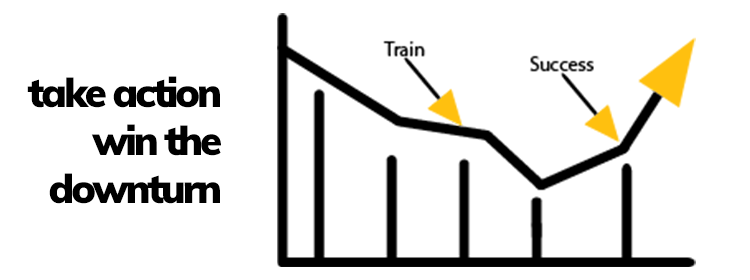
Well founded research in learning and development shows that continuous learning, a little bit every day, is the way to go. Smart, savvy, successful sales people need to train like athletes. This doesn’t mean spending a lot of money on fancy training– it means creating a culture of continuous learning where practice, reflection, self-learning and coaching occur daily using applied, practical sales tools and sales processes that can be easily transferred and taught.  That is why sales training and development programs like Barrett’s Sales Essentials are delivered over 20-40 weeks in bite size chunks to enable learning and development to take place and sales mastery to be achieved which in turn produces sales results.

Sales Training needs to be an integrated process involving role clarity, clear sales competencies, sales plans, sales metrics, regular infield coaching, etc. all linked to a strategy – not some afterthought or isolated event.

Ask yourself these questions:

Q. What are you trying to change by offering sales training?

Q. Do you want change to occur as a result of the training? if so, can it be defined and measured?

Q. What is the point of doing the training?

Q. What am I trying to achieve with training?

A study conducted a number of years ago found that within one week of leaving any sales skills training program (with no follow up sessions or coaching) salespeople had lost 87% of the new skills they had learned during the training program.  Recent research by ES Research Group shows that 90% of all sales training programs result in a 90 – 120 day increase in productivity – but after that, nothing. It was only a temporary blip! Fewer than 20% of companies show sustainable productivity gains that last a year or more.

What we have found, and learning research shows, is that sales training only works if it is carefully matched to and directly supporting the use of your sales model, methodology & sales force profile and it has to be supported by Coaching in the field and real world application hence the 70:20:10 learning philosophy made known by Morgan McCall, Robert W. Eichinger, and Michael M. Lombardo.

To ensure that real learning takes place and endures, we need to emphasise and encourage a holistic approach by integrating both formal and informal elements. The most effective way to learn and develop a new skill or behaviour is to apply and practice it on the job and in real life situations. Good learning and development philosophy is built upon how individuals internalise and apply what they learn based on how they acquire the knowledge.

70-20-10-Learning-PhilosophyThe 70:20:10 formula* that describes how learning occurs:

  • 70% from real life and on-the-job experiences, tasks and problem solving. This is the most important aspect of any learning and development plan. Many organizations agree in theory, but getting it right is another matter altogether.
  • 20% from feedback and from observing and working with role models – coaching from peers, subject matter experts and mentors.
  • 10% from formal training/learning so that participants gain a solid base of knowledge and skills.

At Barrett we believe that the key elements to a successful learning process include both the “70:20:10 formula” and how individuals internalise and apply what they’ve learned.

Effective sales training can be defined as a planned program within the organisation that endeavours to bring about relatively permanent changes in employee knowledge, skills, attitudes, and behaviours. Behaviour modelling training has been found to be most effective.

To give a long term benefit, the training needs to give your sales staff the opportunity to apply what they learn in real life situations out in the field and have regular reviews as to effectiveness and efficiency of application.

Leading companies will link this to a clearly communicated and committed sales capability plan and make it a conscious part of everything: every sales meeting, every sales call, every coaching encounter  will be about sales fitness.

So forget these RAH RAH Hot Bath sessions that promise the world and deliver nothing. You know they DON’T work! Now towel on down and get selling.

Remember everybody lives by selling something.
Author: Sue Barrett, www.barrett.com.au 

Are you wasting valuable selling time?

July 20, 2012 in Sales Culture, Sales Leadership, Sales Management, Sales Results, Uncategorized, Wellbeing

When we employ salespeople we expect somehow that they will be selling nearly 100% of the time, however the truth is most salespeople are lucky if they get to sell 40% of the time. What we mean by this is that many salespeople spend more time in administrative non selling duties and travel than actually selling.

So when it comes to sales productivity and performance, many companies could dramatically improve their sales results by removing the obstacles that keep their salespeople from selling.

help-in-pile-of-crumbled-paper

too many things to do

Too many businesses pay their salespeople for the business development function only to lumber them with too many non-revenue generating activities such as administration, meetings and account problems and wonder why they are ‘stuck in the office’ and not out selling.

A recent study done in Europe and South Africa found that many companies where asking their salespeople to do jobs that could have been better performed by the sales support function, marketing or other administration areas. Whether it is here or overseas, business leaders face the dilemma of doing more with less however removing sales support functions from the sales teams who should be out selling is defeating the purpose of having a sales team.

Salespeople are ultimately measured on how much they sell so if your sales team is spending more than 15% of their time on non sales functions then you may want to rethink where you want your salespeople to operate. Ask yourself and/or your sales manager what you expect of your salespeople: Sales or Deliveries or Service? If it is more in the delivery and service area such as account management then set their sales budgets accordingly. If on the other hand you want them to be operating in pure business development roles then remove as many obstacles that are in their way and let them sell.

Remember everybody lives by selling something.

Author: Sue Barrett, www.barrett.com.au

Customer Satisfaction & Retention Booster

July 10, 2012 in Attitudes & Behaviours, Customer Service, Marketing, Sales Management, Sales Relationships, Sales Results, Sales Tips, Success

It is five to ten times easier to keep a customer we have than to get a new one – so taking customer satisfaction and retention seriously should be serious business. We already have the most powerful marketing tool to boost customer satisfaction and increase customer retention, as well as improve employee morale and develop new products and services that are exactly what our customers want and need. The problem is that most companies don’t use it.

There is no more useful tool in our marketing armoury than our front-line sales and service people. They are constantly getting feedback from customers about what is good, what is bad, what is missing and what the competition are doing.

Listening to the Needs of the Customer

Listening to the Needs of the Customer

Do you have open communication channels within your business so that sales and service staff can feedback customers comments, queries, ideas and complaints? Do you take this information seriously and do something useful with it?

It is very easy to dismiss customer complaints as unfounded griping or ignore customer ideas and comments as irrelevant. Feedback from sales people about products/services not meeting customer needs or complaints about service delivery can be perceived by management as excuses for not achieving sales targets. However, if management effectively registered these comments from the field, analyzing them for trends, insights and new ideas, they could include vital information in their strategy deliberations where they could create new solutions and

1. Further boost customer loyalty
2. Create a competitive advantage
3. Improve morale for sales and service teams

By using the sales teams’ feedback, the business is able to develop better products and services to meet customers’ needs and the bonus is that sales people feel included in the future direction and growth of their business. By being taken seriously, sales people are not just seen as the one dimensional revenue generators. Their feedback affects:

“do the right thing by customers and take their feedback seriously then it creates less administrative work rather than more.”

and builds our

  • Industry knowledge
  • Customer knowledge
  • Domain knowledge

To begin collecting feedback from the field we need to sensitise the sales team to its importance. We need to make them aware of the market they serve and then put a system in place for collecting, channeling and addressing customer feedback. Social media tools and PDAs (personal device applications) such Smart Phones and Smart Tablets should make it much easier for feedback to be collected. Essentially, every customer interaction is market research for sales people and should always be treated as such.

The dilemma that faces many sales managers is to keep their sales people selling, with as much face time in front of customers as possible and reporting customer feedback can possibly add extra administration time.

However, if we do the right thing by customers and take their feedback seriously then it creates less administrative work rather than more. Once sales people understand that action will be taken on their feedback, they feel compelled to gather the information.

In today’s competitive marketplace if we are not collecting customer feedback through our sales people and fail to act on it, our customer will quickly find someone else who will.

Remember everybody lives by selling something.

Author: Sue Barrett, www.barrett.com.au

Switch to our mobile site