
In 30 seconds
The Net Easy Score (NES) has stepped out of the Net Promoter Score’s (NPS) shadow, becoming the key to customer loyalty in 2025. NES measures how easy it is to resolve issues or complete tasks, using a 7-point scale. Unlike NPS’s loyalty focus, NES targets friction reduction, which a 2024 HBR study says drives loyalty 2.4 times more than delight. Companies like MECCA (83% NES) and Bendigo Bank (79% NES) excel by simplifying processes. In 2025, NES is the mindset for lasting customer relationships.
In 3 minutes
In a world where customers demand seamless experiences, the Net Easy Score (NES) is no longer just a supporting act to the Net Promoter Score (NPS), it’s taking centre stage. For years, NPS has been the go-to metric for measuring customer loyalty, but NES, which focuses on reducing friction, is proving to be the real driver of customer satisfaction and retention in 2025. Backed by fresh research, NES is stepping out of NPS’s shadow to redefine how businesses deliver exceptional customer experiences.
What is Net Easy Score (NES)?
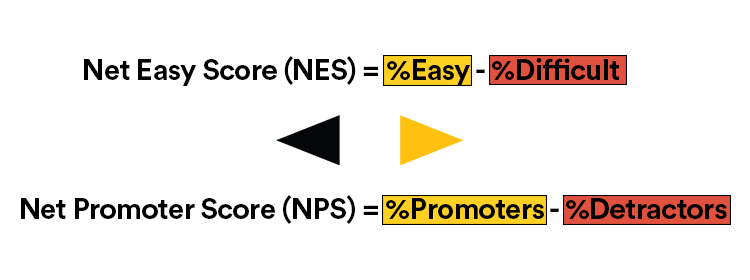
NES measures how easy it is for customers to resolve issues or complete tasks with a business. Customers are asked: “How easy was it to handle your issue with us today?” They respond on a 7-point scale (1 = very difficult, 7 = very easy). The score is calculated by subtracting the percentage of customers rating their experience as difficult (1–3) from those rating it as easy (6–7).
Unlike NPS, which gauges loyalty through likelihood to recommend, NES homes in on eliminating friction, the barriers that frustrate customers and drive them away. Research, including a 2024 Harvard Business Review study, shows that ease of service is 2.4 times more effective at building loyalty than delighting customers with extras.
From the Shadows to the Spotlight
When I first wrote about NES in 2018, it was an emerging metric, overshadowed by the widespread adoption of NPS since its debut in 2003. Introduced in the early 2010s by researchers at the Corporate Executive Board (now Gartner), NES was designed to address NPS’s blind spot: the actual effort customers put into interacting with a business. While NPS dominated, NES quietly gained traction as customer expectations for effortless experiences soared.
In 2025, NES is no longer in the background. A 2024 Gartner study reveals that 65% of Fortune 500 companies now track NES alongside or instead of NPS, up from 40% in 2018. The 2025 Forrester Customer Experience Index shows that businesses prioritising low-effort interactions (measured by NES) outperform NPS-focused competitors in retention by 15%.
Why? Customers today, whether shopping online, resolving service issues, or navigating complex B2B deals, value ease above all else. A 2025 McKinsey report found that 70% of customers will abandon a brand after just one high-effort interaction, making NES a critical metric for survival.
Why NES Matters in 2025
The digital age has amplified the need for NES. While technology streamlines many processes, it also creates new pain points: think endless chatbot loops, clunky website navigation, or automated systems that fail at complex queries. A 2025 Zendesk Customer Experience Trends Report notes that 82% of customers prioritise quick issue resolution, while only 45% care about personalised offers. Meanwhile, a 2024 Deloitte study found that high NES scores correlate with a 20% increase in customer retention and a 15% revenue boost compared to NPS-focused strategies.
NES’s rise reflects a shift in customer priorities.
It’s not about being wowed, it’s about making life easier.
Whether it’s a seamless online purchase, a swift resolution to a billing issue, or clear communication in a B2B deal, reducing effort is the new currency of loyalty.
Real-World NES Success Stories
Leading companies are embracing NES to drive results in 2025:
- MECCA: The Australian beauty retailer enhanced its online and in-store experience by introducing a simplified returns process and live chat support with trained beauty experts. In 2024, MECCA’s focus on seamless customer interactions led to an NES of 83%, correlating with a 12% increase in repeat purchases, reflecting their commitment to ethical sourcing and customer ease.
- Bendigo Bank: This community-focused Australian bank streamlined its loan application process, reducing paperwork and offering dedicated support staff for complex queries. Their 2024 NES of 79% (up from 62% in 2023) aligns with a 9% boost in customer retention, showcasing their dedication to accessible, people-first banking.
- T2 Tea: The Australian tea company revamped its e-commerce platform to simplify custom tea-blend ordering and introduced a responsive customer service team for quick query resolution. Their 2025 NES of 81% reflects a 11% increase in customer loyalty, underpinned by their ethical sourcing and focus on effortless experiences.
- Telstra: Australia’s telecom giant cut call wait times by 40% and introduced a “one-contact resolution” policy in 2024, boosting their NES from 60% to 78% and retention by 10%.
- Xero: The cloud accounting platform simplified onboarding for small businesses, reducing setup time by 30%. Their 2025 NES of 80% reflects intuitive design and responsive support.
How to Boost Your NES in 2025
To make your business “net easy,” adopt these research-backed strategies:
- Map the Customer Journey: Audit touchpoints to identify friction, as 60% of high-NES businesses do. Talk to us about buy-sell-service customer mapping.
- Enable Human Interaction: Make it easy to reach a knowledgeable person for complex queries. A 2025 McKinsey study shows 65% of customers prefer human support for intricate issues. Talk to us about how to equip your people for these more complex discussions.
- Simplify Digital Interfaces: Streamline websites and apps. A 2024 UX study found 75% of customers abandon sites requiring more than three steps for a task.
- Communicate Proactively: Keep customers informed to reduce effort and anxiety.
- Measure and Improve: Regularly ask the NES question and use AI analytics to spot high-effort trends, as recommended by Gartner in 2025.
Questions to Ask Yourself
To lead with NES, reflect on these:
- How easy is it for customers to reach a real person?
- Are your systems intuitive for customers and staff?
- Can you resolve complex issues quickly?
- Do you keep the promises made in your marketing?
- Does your team genuinely care about reducing customer effort?
The Future is Effortless
In 2025, NES isn’t just a metric, it’s a mindset that’s overtaking NPS as the key to customer loyalty. By focusing on ease, businesses can build lasting relationships in an era where friction is the enemy. NES has stepped out of the shadows, and it’s time for your business to shine with it.