
In the workplace context, there are many different types of Psychometric Assessments that can be used for both selection and development. They are usually designed by psychologists and provide additional information that helps the employer to form an overall profile of candidates or employees. This can be used to predict how they will function in their workplace or highlight areas for development and potential job preferences.
Our knowledge and experience with Assessments is that they should be meaningful for both the employer and the employee. In order to make the most of any Assessment we need to link the information to something meaningful and purposeful links to key goals and objectives, role profile’ and business culture, and so on.
Our aim is for people and businesses to get the most out of their Assessment experiences.
Assessments can support you in making better choices and decisions with career, life, and business. We have carefully selected Assessments that you can use across your business for selection and development, ensuring that you find the right people and once they are in the role they do the right things. Making the link from selection to development is where Assessments can really shine. Some examples of how we work with businesses to make the most out of Assessments are:
- Create personal action and development plans
- Support Managers with coaching guides and resources
- Find the right people with matched behavioural interview guides and questions
- Team profiling and benchmarking top performers
- Motives and values mapping
- Training recommendations and workshops
- Re-testing sales fitness (SPQ*GOLD) 1-year on to get a ‘before and after shot’
If you started out unsure about Assessments, hopefully you are more comfortable now and, perhaps, even wondering how Assessments might benefit you and your business. If you would like to know how to get the most out of your Assessments speak to us about the various applications from selection through to development.
Assessment Fields
Getting it right when it comes to hiring your people is critical. The right people will not only enable your organisation to ride out economic uncertainties but will ensure you are ready to seize the opportunities that present during the recovery. We all know the catastrophic impact a poor performing sales professional can have on an organisation:
- Erosion of brand and reputation
- Lost clients, staff retention issues, and lost productivity
- Diminished hard-earned competitive advantage
- Disruption of high-performing teams
- Ultimately reduced bottom line through lost sales
The right psychometric assessments are a great asset to any Recruitment or Selection process however they should never be used in isolation, instead they are best used in concert with other validated selection tools such as structured behavioural interviews, competency based simulation exercises or role plays , culture & values Interview, and structured reference checks where findings can be cross referenced against core criteria that have been established as relevant to the job and culture in question.
Benefits of using Assessments in Recruitment and Selection
- Make better informed recruitment decisions about candidates
- Minimise time managing poor performance
- Better target your development investment
- Reduce all risks associated with poor performers
For addition recruitment resources go to:
- Selection Assessment Packages
- Recruitment Kits
- Behavioural Interview Questions
- Sales Competency Dictionary
- Simulations & Role Plays
Making better choices, releasing limiting beliefs, realising your potential, understanding others work styles, working in collaboration to achieve amazing results and long held ambitions comes from gaining insight into your personality, motives & values, potential leadership challenges, or fears.
Through proprietary models, coaching and (sales) training strategies, behaviour change processes and personal insight, underpinned by our Competency model we use our assessments to work in partnership with help individuals, teams, leaders, and organisations gain personal insight into their strengths and areas for development to assist them in maximising their capabilities by adopting proven processes and productive behaviours making them a ‘way of life’. This then leads to increased professional and personal confidence and competency, productive work place, client loyalty, revenues and profit.
Using Assessments in Development
- Sales Coaching
- Leadership & Executive Coaching
- Training Needs Analysis
- Team Patterns and Trends
- Culture mapping
What makes us different
- Our approach is grounded in the powerful coupling of knowledge and insight
- Providing access to both knowledge and insight allows for the cultivation of wisdom
- Results through working with the whole person, aligning intentions and actions to purposeful strategy
Our value to clients
Our clients value the holistic approach we take in working alongside them to achieve mastery and create excellence through purposeful action and sustainable (sales) cultures.
For addition development resources go to:
Best Practice
To get the most value out of psychometric assessments when applied to your selection process we suggest you consider these important points:
- Use as part of a selection process: The right psychometric assessments are a great asset to any Recruitment or Selection process however they should never be used in isolation, instead they are best used in concert with other validated selection tools such as structured behavioural interviews, competency based simulation exercises or role plays , culture & values Interview, and structured reference checks where findings can be cross referenced against core criteria that have been established as relevant to the job and culture in question.
- Predictive Ability: Psychometric assessments should account for no more than 20% of your decision making criteria. They can never be 100% predictive of performance and if anyone claims an assessment, by itself, can have predictive ability over 60% they are not being truthful. Sadly, many people rely on overly simplistic grid type assessments that are not predictive of sales success nor purpose built for sales recruitment and are even less reliable than ‘gut’ feel.
- Purpose Built: Use recruitment grade psychometric assessments that have been purpose built to measure specific qualities, abilities or attributes. Quality assessment tools will present information and inform you of the following:
- Relevant: Make sure the assessment(s) is designed for use in selection for a ‘normal’ (rather than clinical) population, is calibrated to the appropriate level (e.g. management, supervisory, entry level) and has occupational context i.e. sales.
- Practical: Make sure the test/questionnaire is easy to administer, undertake and score. Check what facilities and equipment are required to complete the assessment and how quickly reports can be generated.
- Technical quality: Technical information is typically presented in a test manual and hence, the absence of a test manual should raise some doubts. In terms of technical properties, you need to consider: Reliability, Validity and Norm groups (these are common technical terms used in psychometrics). All genuine assessments will provide this data. Wading through statistical information can be dry and confusing for some people. If that includes you, seek the assistance of a Psychologist or other person familiar with the correct use of psychometrics. If you decide to ignore technical evidence, because it all seems too hard, it could be at your peril.
Speak to us about your assessment needs.
Talk to us, your selling better advisory team, and we’ll be able to advise you on the best training solution for your business.
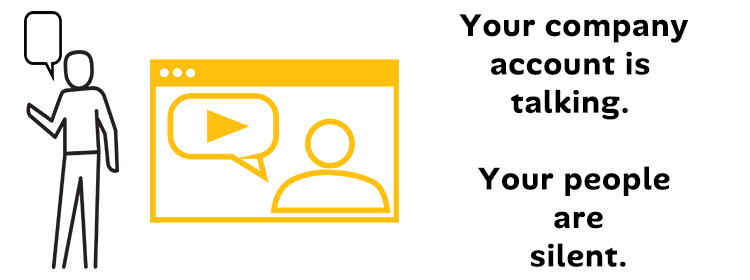
Your company account is talking. Your people are silent.
In 30 seconds The Problem: Your company account is active, but the people who do the work are invisible where buyers actually decide. When a buyer researches the person calling them and finds a thin ...
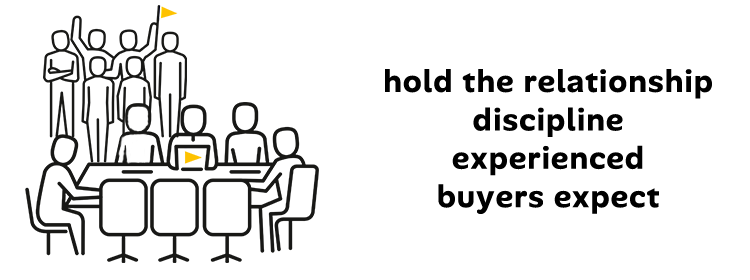
The Generational Buying Committee
In 30 seconds The Problem: The B2B buying decision is no longer one person's to make. The average committee now runs to 13 or more stakeholders, each researching independently, and around 71% of ...

Your Buyers Are Researching You Right Now. What Do They Find?
In 30 seconds The Problem: Three in four ANZ B2B organisations are failing the shortlist test. Not because their product is inferior - because their digital footprint is noise, not signal. Buyers ...
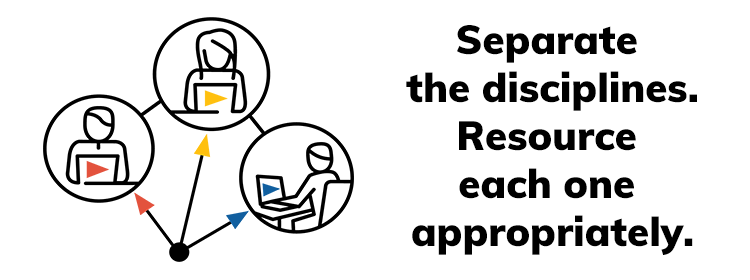
The Three Disciplines You Are Running as One (And Why That Breaks Down)
In 30 seconds The Problem Most organisations treat Business Development, Prospecting and Digital Social Selling as the same job, run by the same people, measured the same way. They are not the same. ...